
“Truth is the bedrock upon which all morality is cast, and morality is the living breath that makes Truth absolute; when applied to the sacred vessel of Art, this harmony determines its worth—for a nation’s legacy is not found in the noisy ledger of its administrators, but in the uncompromised soul of its practitioners.”
We celebrate 80 years of Independence today, but let us finally be independent in thoughts, deeds, and actions. True independence cannot merely be a date on a calendar; it must live in the uncompromised truth of our cultural conscience. To safeguard the pristine in all walks of life, we must actively strip away the petite barriers of power politics, institutional lobbying, and the manufactured noise that dictates modern success.
Art, in its highest form, must remain our great didactic mirror. It must boldly reflect the raw, actual reality of our human experience, ensuring that what we sustain is truly authentic. If not, we will watch good, authentic artists fade into obscurity, leaving a concerned fraternity standing in the shadows—carrying heavy whispers, forever wondering at the how with a desperate, unanswered why.
Yet, today we find ourselves suffocating in a hyper-optimized social media landscape. We watch as innocent childhood, budding genius, and seasoned mastery are all forced into the same frantic arena—vying for fleeting digital footprints in 30-second reels. This desperate chase of quantity over quality dilutes the sacred.
For masters and mentors who have crossed into their sixties and seventies, art was never a transaction with an algorithm. It was a lifelong penance. These are individuals who sustained India’s cultural tapestry through decades that didn’t know the phrase “viral content.” They functioned in an era where their only validation was the quiet, breathless awe of a live audience, occasional print coverage in regional newspapers, or more frequently, countless profound performances that were never reviewed at all. They braved severe dents in their pockets, sacrificing financial security to keep a legacy alive, driven entirely by an unyielding internal passion.
But shift the camera in close shot and capture their predicament today. To take these legends and force them into a framework where they must actively beg for recommendations, chase down bureaucratic sponsors, or ask their working children or preoccupied teenage grandchildren to upload their life’s devotion onto a web portal introduces a deeper, quieter crisis.
In the sacred traditional Indian ethos, mastery is wrapped in sacred humility (Sadhana). A guru or master craftsman does not market themselves. To ask a septuagenarian to solicit letters of support or lobby for their own name violates the very dignity that made them masters. For them, their art was their very life breath! It was meant to be their silent eloquence; but today, having them scream for attention online feels like an insult to a lifetime of quiet devotion that transformed communication into communion.
The digital portal inherently assumes that what is undocumented does not exist. A modern artist can stitch together a beautifully edited 4K video reel. Whereas an elderly exponent from a remote village might only have a faded, yellowed news clipping from 1982—or nothing but the memories of her art encushioned in many hearts not even living today. It was just the dance—no compiling of endless performances, and endless hearts whose tears made every effort so cherishable that it triggered the urge to better oneself and to seek if only to share as Art! When a system favors a cleanly scanned PDF over a lifetime of unrecorded, unreviewed, yet priceless community performance, it commits an act of structural erasure.
There was a time when not so many artists were prevalent, when dance forms migrated from home terrains to other states and the limited number of awards were right then. Today it’s an ocean, with millions seeking to stand out. Awarding institutions once could be true seekers—discovering and presenting honors to the maestro as an act of institutional gratitude. To embrace the ocean today necessitates converting the process into a centralized, competitive application system on the Rashtriya Puraskar Portal. On the other side of the canvas, anxious, venerable mentors stand in a digital queue, dying a thousand deaths waiting for an automated confirmation code.
Post it all, one wonders at the outcome. Do they truly assess so many applicants? The results, post all the epic struggle, leave you wondering as to where the transparency is—when for the few authentic, there are those whose hands cradle that award that mocks at hierarchy, contributions, recommendations, state awards, and political connections. We have come a long way as a part of the history of our nation and the evolution of all that is true Art rooted in the bequeathed legacy of great Gurus. Perhaps it is time to look at the framework closely and ask questions as to why what could easily find us has been made so distortingly complex.
The process of assessing and choosing cultural nominations in India is structurally flawed by profound systemic leakages that systematically isolate true masters. While regional ministries celebrate high-profile bureaucratic milestones, the internal domestic selection committees operate with an arbitrary disconnect that fractures the link between regional excellence and national honor. By forcing a complex, multi-layered civilization to prove its worth through hyper-centralized portals, the state reduces deep artistic devotion (Sadhana) to sterile administrative metrics. This foundational compromise isolates grassroots practitioners, shifting the focus of national recognition away from a transparent evaluation of artistic lineage and toward the navigation of cold, bureaucratic machinery.
The lack of an integrated and automatic progression from regional validation to national prominence represents a critical flaw in the Indian cultural ecosystem. State Sangeet Natak Akademis parse through millions of residents to select a handful of masters based on localized merit, deep regional criteria, and extensive community service. Logically, these state laureates should serve as the natural, baseline shortlist for national honors. Instead of honoring regional selections, the national selection bodies—such as the central Sangeet Natak Akademi (SNA) and the Padma Awards Committee—require a complete administrative reset. Artists must independently secure recommendations from eminent practitioners, gather formal certificates from gurus, and navigate complex portals like the Rashtriya Puraskar Portal. Extraordinary artists simply drift out of the competitive race. Content with their regional peace, they choose to let their art live quietly where it is genuinely loved rather than aggressively lobbying a distant committee. This lack of institutional coordination makes state-level awards feel isolated, turning what should be a transparent upward ladder into a closed loop where artists are left behind out of sheer exhaustion and dignity.
The leakages within the validating system become explicitly political when ministerial recommendations and top-down patronage override peer validation. In spite of an artist securing flawless recommendations from great practitioners, holding formal state honors, and maintaining pristine credentials, an arbitrary system allows a minister’s subjective recommendation to take absolute precedence. This political gatekeeping creates an insurmountable barrier for an extraordinary artist living in another state who is already in their late sixties or seventies. Expecting a legendary practitioner at that vulnerable stage of life to travel, self-promote, and curry political favor in a distant national capital is a systemic failure.
If every state artist who has crossed seventy and is still working had their credentials, peer recommendations, and lifelong contributions openly displayed in a transparent, public, state-wise tabulation, the entire world could see their unyielding commitment. Such a public ledger would prove that their work transcends their age—shaming the system’s tendency to reduce a lifetime of discipline to a mere numerical age limit—and honors an art form that is their very life breath, transforming their decades of service into a continuous prayer.
The central awards system remains severely ill-equipped to track or accommodate the immense scale of India’s cultural workforce, creating acute domestic vulnerabilities. The system struggles to recognize domestic migrant artists—those who leave their native provinces to establish schools and cultivate classical or folk traditions in entirely new linguistic zones. An artist from Odisha building an Odissi community in Maharashtra or Assam falls into a complete bureaucratic void. They are forgotten by their native state because they left, and bypassed by their host state because the art form is not native to the local landscape.
Furthermore, the statutory limits on national honors create an immediate bottleneck. The central Sangeet Natak Akademi Puraskar is strictly capped at 46 annual awards, while the entire Padma civilian award pool is legislated to not exceed 120 recipients a year. For a nation with millions of practicing artists across diverse sub-genres, these restricted slots create an artificial scarcity. Decades of documented work and stellar professional credentials frequently go unrewarded simply because the mathematical ceiling cannot accommodate the sheer density of Indian talent.
The pursuit of global stamps of approval reveals a complex hierarchy where the Nation officially seeks validation from UNESCO, driven by intense lobbying from individual States. Under UNESCO guidelines, a state-level cultural body or regional community cannot apply directly to Paris. Only the sovereign country—represented by the Ministry of Culture and agencies like the Indira Gandhi National Centre for the Arts (IGNCA)—can officially submit nominations. The Nation seeks this validation as a tool of geopolitical soft power, using ancient heritage to boost its cultural standing on the global stage. Simultaneously, individual state governments aggressively lobby the Central Government to send their specific regional assets to UNESCO.
This intense pressure has turned living faiths into high-stakes competitions, where massive community rituals like Durga Puja in Kolkata and Garba in Gujarat are thrust onto international lists to serve as showcase templates. The scramble trickles down to ancient temple arts like Kerala’s Koodiyattam (Sanskrit temple theatre) and the intense, localized subaltern devotion of Muthappan Theyyam, with regional bodies constantly vying, drafting proposals, and reshaping their rituals into bureaucratic files just to catch Paris’s eye. While the State creates the demand out of regional pride and economic interest, it is the Nation that acts as the official petitioner, desperate to convert our living, local Sadhana into a standardized international trophy.
This bureaucratic failure is driven by a deep post-colonial anxiety that prioritizes historical packaging over active, present-day practice. To satisfy international auditing standards, timeless oral traditions must be anchored to concrete, linear historical brackets, such as dating the Natyashastra manuscripts strictly to a specific century BCE to qualify for UNESCO’s Memory of the World Register. This requirement fundamentally misinterprets the nature of an oral lineage. A Vedic chant or a classical movement does not belong to the past; it belongs entirely to the moment it is uttered or danced right now. Pinning it to a historical timeline treats it as an archival relic rather than a living force, flattening cyclical, cosmic time into a flat calendar. Cosmic time is cyclical, expansive, and deeply personal—tied to the sunrise, seasonal changes, and lifelong discipline. Institutional time is flat and mechanical, measured in fiscal quarters, application deadlines, and short-term political windows. When institutions step in to manage heritage, they turn a sacred daily duty into a packaged tourist commodity or a neatly labeled museum catalog.
The trend of seeking validation for foundational oral traditions and holy texts like the Bhagavad Gita completely devalues their essence as an active way of life. When text-based traditions like the Bhagavad Gita are celebrated primarily for their inclusion in static manuscript registries, the focus violently shifts from living the truth to preserving the object. The Bhagavad Gita has sustained human consciousness, ethics, and spiritual duty (Dharma) for centuries as a dynamic, internal dialogue occurring in the messy battleground of the human mind. It is a daily manual for living, an unbroken thread of faith that requires no international certificate or state-issued stamp of authenticity to prove its timelessness. To celebrate a foreign designation as the moment the Gita or the Vedas attain “global standing” betrays a deep insecurity. It implies that our indigenous heritage is somehow incomplete until it is cataloged alongside dead diplomatic archives. This institutional flattening prioritizes the preservation of fading ink on paper over the economic survival and dignity of the living human beings who carry the underlying traditions forward.
This systemic trajectory leads to a highly precarious cultural frontier that threatens to institutionalize personal faith and treat community devotion as a mere spectacle. By constantly seeking external validation and certificates for ancient texts, oral histories, and sacred heritages, the state subtly normalizes the idea that cultural practices require bureaucratic verification to be legitimate. If this trend continues unchecked, personal devotion, private beliefs, and ancient oral methodologies will eventually require official verification to be deemed authentic.
Voicing these critiques often carries a heavy weight of hesitation, as many artists and cultural workers are afraid to speak out against powerful institutional bodies for fear of being sidelined or denied future opportunities. However, breaking this silence is essential to create public awareness and challenge a system that has grown increasingly obsessed with bureaucratic validation over living art.
To force a master whose life has been an unbroken prayer—a lifelong Sadhana—into the sterile, automated queue of a digital database is to commit a profound sacrilege against our collective cultural inheritance. We have traded the ancient, reverent search of the seeker for the cold efficiency of the scanner. In doing so, we demand that our gurus trade their sacred humility for the aggressive, desperate language of self-solicitation.
An empire may be measured by its portals and its metrics, but a civilization is remembered only by the pristine preservation of its soul. If our independence at eighty years is to mean anything, it must mean the liberation of our heritage from the tyranny of bureaucratic convenience. We must dismantle this distortingly complex machinery and return to a system of institutional gratitude—where the state seeks out the maestro in the quiet corners of our villages, not because they filled out a flawless scanned PDF, but because their unrecorded art has kept the very heart of the nation beating. Let us close the leakages of power politics and patronage before the heavy, wondering whispers of a concerned fraternity turn into the permanent, silent grief of a forgotten legacy. True preservation cannot happen via centralized archives, international tags, or massive spectacles designed to break world records. It must happen in the immediate present by establishing a transparent, automated path from regional recognition to national support—shielding the fragile human chains that sustain these living traditions every day.
“When the state demands that the Guru shout to be seen, it is not the artist who is diminished, but the nation that has gone deaf.”
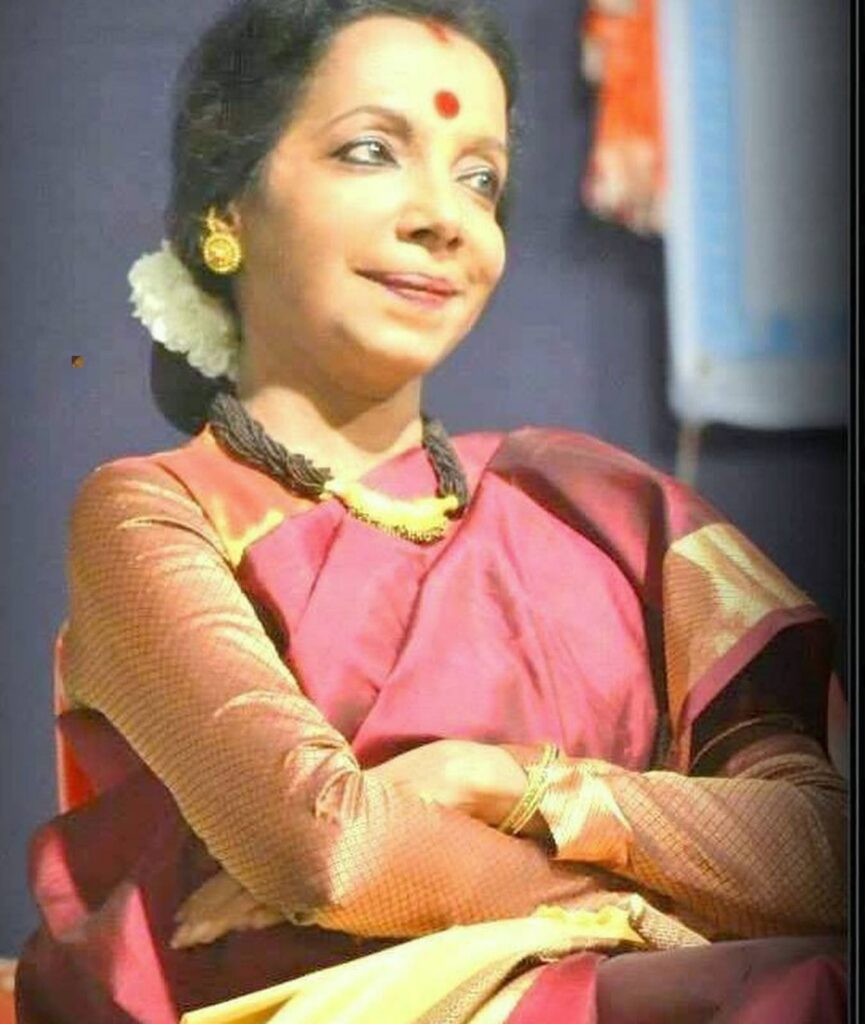
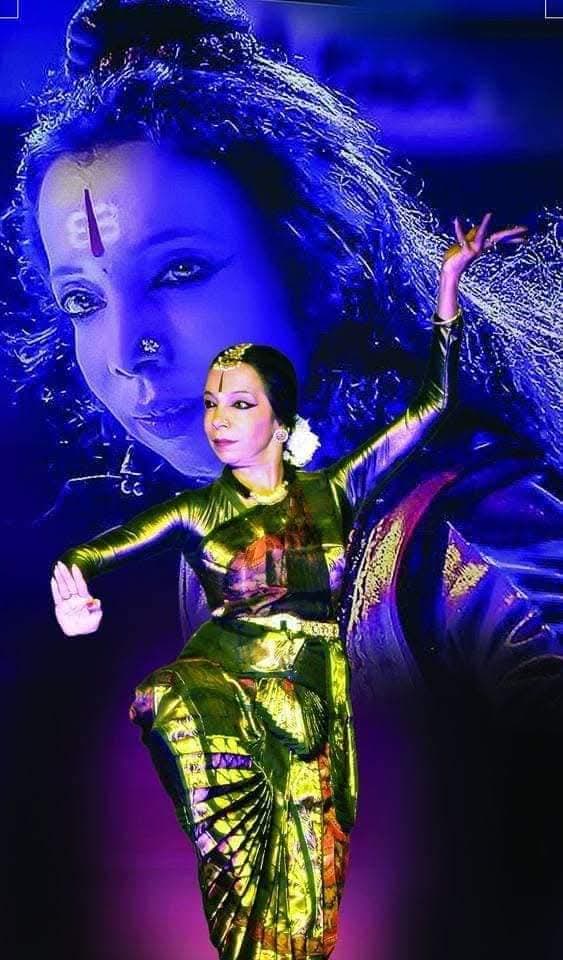
In a searing critique, Kalashri Dr. Lata Surendra- renowned exponent, teacher, choreographer, dance journalist, independent researcher, and curator—gives voice to the quiet, profound cry of many a legendary artist awaiting national recognition. With striking eloquence, she also questions the sterile institutional criteria currently used to judge and validate what is essentially our deep, living way of life, illuminating how the sacred ethos of our heritage—much like the holy Bhagavad Gita—is systemically flattened into bureaucratic administrative metrics.