

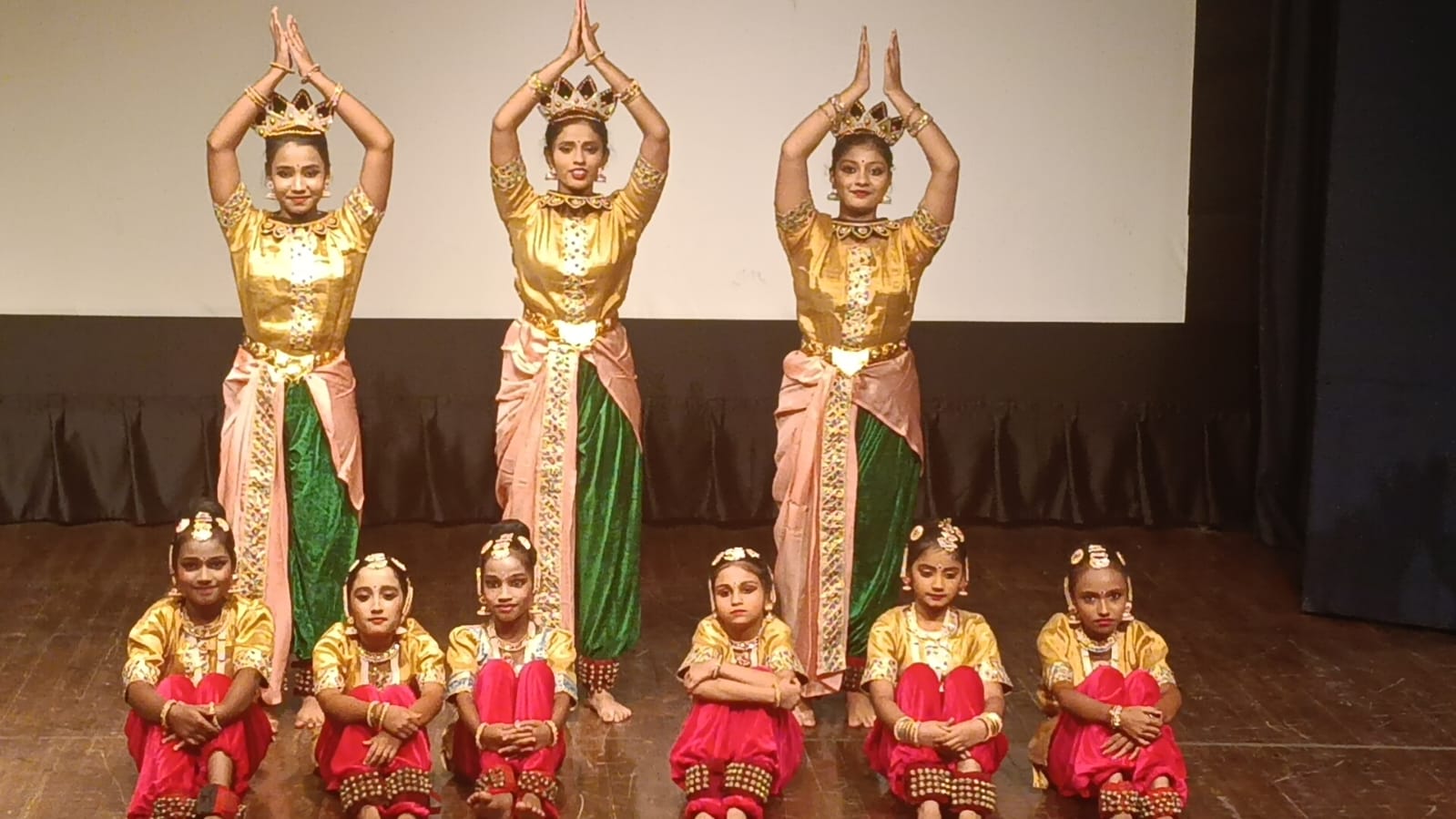
Twelve poems. Twelve moods. Twelve stories. One stage.
On the evening of May 29, at the venue of Mini P L Deshpande auditorium Ravindra Natya mandir, Mumbai, the young disciples of Abhinayaa Institute of Research and Fine Arts undertook a challenge that would test not only their command over classical dance but also their ability to interpret poetry through movement. Poems that had lived quietly on the pages of a book were now to find expression on stage, each performance unfolding with precise timing, intricate choreography and heartfelt emotion.
The youngest performer barely seven years up to fourteen year olds, all twenty of them, they carried the responsibility entrusted to them with remarkable confidence and grace. Their task was not merely to dance but to breathe life into verses, transforming words into visual poetry through expression, rhythm and the language of mudras.
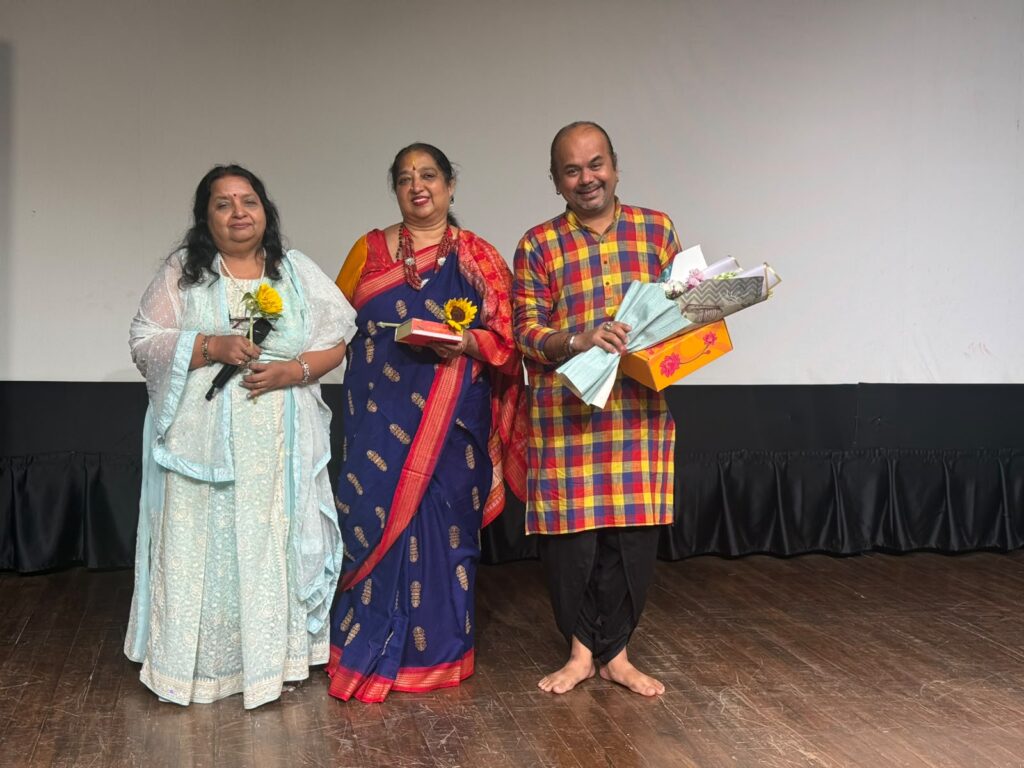
At the heart of the production stood Guru Dr. Chitra Vishwanathan, teacher, mentor and choreographer. Her vision was simple yet profound: expose children to meaningful literature and diverse themes while nurturing their artistic abilities from an early age. “Catch them young,” has long been her philosophy. Under her guidance, the students learnt that dance is not simply a sequence of steps but a medium of storytelling capable of conveying joy, sorrow, devotion, humour and hope.
The evening was equally significant for poet Roseline, whose verses formed the foundation of the programme. The performance marked one of the rare occasions where an entire collection of poems was interpreted through Indian classical dance on such a scale. As the lights dimmed and the curtains prepared to rise, the poet could only wait with bated breath, placing her trust in the young dancers who would become the voice of her words.
The programme itself was a delightful tapestry of secular and universal themes. Every poem demanded a different emotional palette, a different musical setting and a different style of interpretation. Alongside the young girls was a spirited young boy who effortlessly slipped into contrasting roles, portraying both Jesus and a fictional village baker, bringing innocence and vitality to the stage.
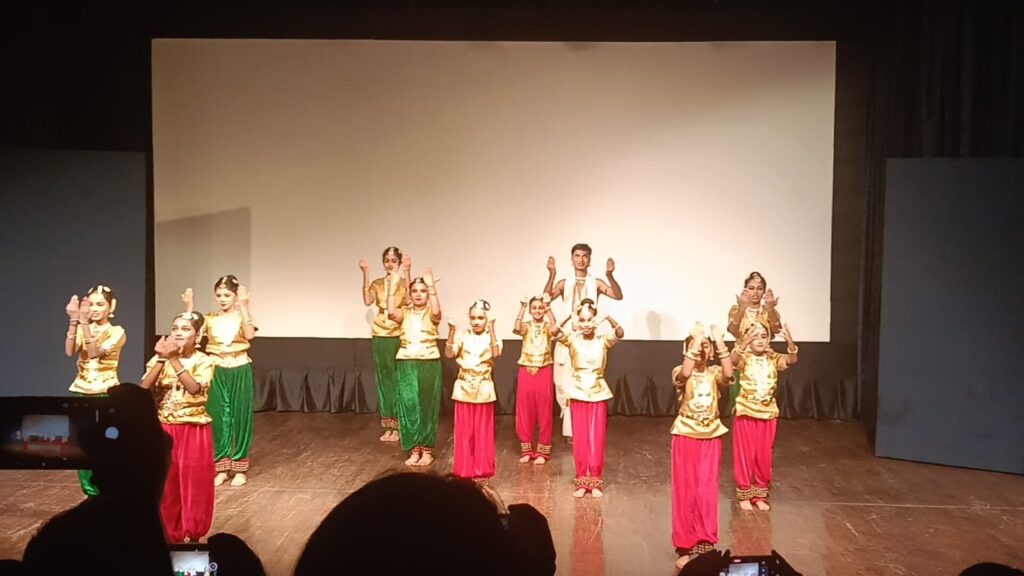
The opening presentation, The First Downpour, set the tone for the evening. Drawn from Roseline’s first published collection, A Poet’s Choice: The Bouquet of Verses, the poem celebrates the arrival of the monsoon and the joy it brings to nature. As the music began, the dancers entered with infectious enthusiasm. Through expressive mudras and graceful movements, they painted vivid images of fresh green meadows, bubbling brooks, dancing peacocks and dark rain clouds gathering across the sky. The performance captured the wonder with which children greet the season’s first showers and reminded the audience of nature’s enduring magic.
The second presentation, Roar, Roar Thou Monsoon Wind, offered a striking contrast. Inspired by the cadence of a lullaby, the dancers gently cradled dolls in their arms as though rocking infants to sleep. Soft movements and delicate expressions accompanied the soothing melody, while the poem itself carried a deeper philosophical message. Though the wind may rage and storms may break branches, the true hardships of life often lie in fractured relationships and human ingratitude.
The verses reflect on the disappointments one encounters in life—the fading of affection, Yet the poem ultimately chooses hope over bitterness. It encourages the listener to forgive, to move forward and to believe in the essential goodness of life.
The work pays subtle homage to William Shakespeare’s immortal lines from As You Like It, “Blow, blow, thou winter wind,” reimagining the sentiment through an Indian monsoon and a contemporary perspective while saluting the genius of the Bard more than four centuries after his lifetime.
Throughout the evening, the dancers demonstrated one of the greatest strengths of Indian classical art—the expressive power of mudras. In Bharatanatyam and other classical traditions, the hands become a language in themselves. Every gesture carries meaning, allowing the dancer to narrate stories, depict emotions and communicate ideas without uttering a single word.
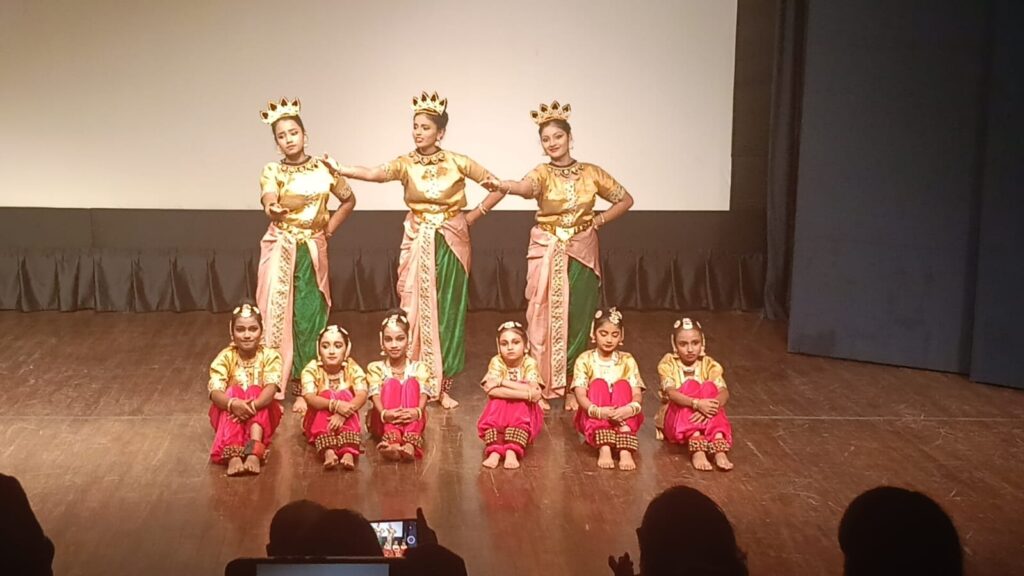
“Mudras become a very powerful form of expression. Without speaking, through dance one can convey a beautiful story through the language of signs,” explains Guru Dr. Chitra Vishwanathan. It is this understanding, combined with years of experience as teacher and choreographer, that enabled her to transform poetry into a vibrant stage production.
What made the evening truly memorable was the seamless collaboration between literature and dance. The poet offered the words, the guru gave them movement, and the young performers infused them with life and youthful energy. Together they proved that poetry need not remain confined to books; it can leap from the printed page, dance across the stage and touch hearts in ways that transcend language.
For the young artistes of Abhinayaa Institute of Research and Fine Arts, this production was another milestone in their artistic journey. For Guru Dr. Chitra Vishwanathan, it was a reaffirmation of her belief in nurturing talent from childhood. For poet Roseline, it was the fulfilment of a cherished dream—to see her verses take wing through the grace of classical dance.
As the curtain fell and the applause filled the auditorium, one truth became abundantly clear: poetry and dance are kindred arts. One speaks through words, the other through movement, and when they come together, they create a language that everyone can understand.