
Review: A Monumental Triumph of Rhythm and
Devotion at Tijara Fort-Palace
By M. S. M Rasika
The Tijara Fort-Palace Festival stands as a magnificent testament to the cosmic convergence of art and heritage, a living legacy kept vibrant and breathing through the towering contributions of its curator, Shri Ashish Khokar, ( critic, connoisseur,
Historian,archivist,administrator,Editor,columnist, and its visionary owner, Shri Amarnath. Together, they have transformed this ancient, historic sanctuary into a dynamic portal where time dissolves and the sacred traditions of India are not merely preserved, but brilliantly revitalised. The Neemrana group has regular Saturday shows September to April with pick up ,drop and stay and an honorarium to compliment a sadhana with an interested audience to match.
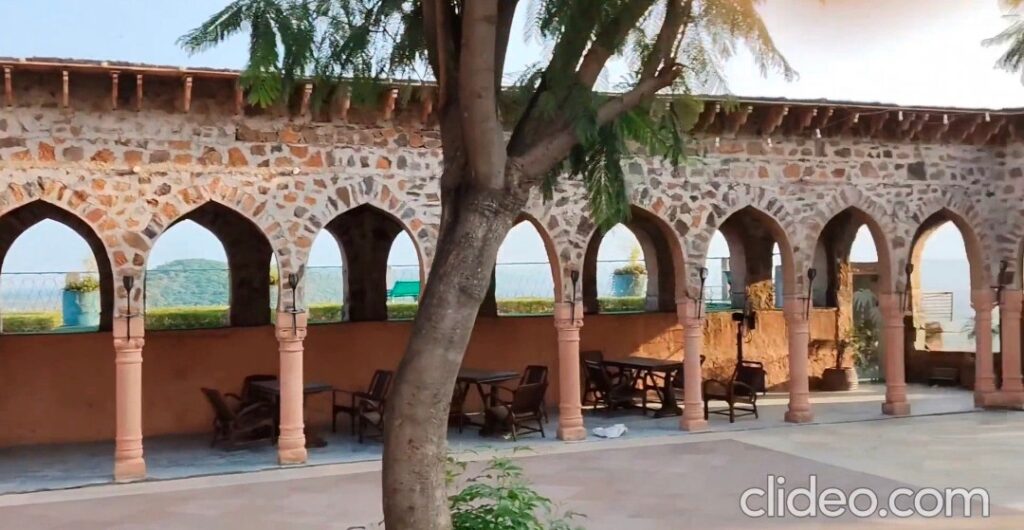
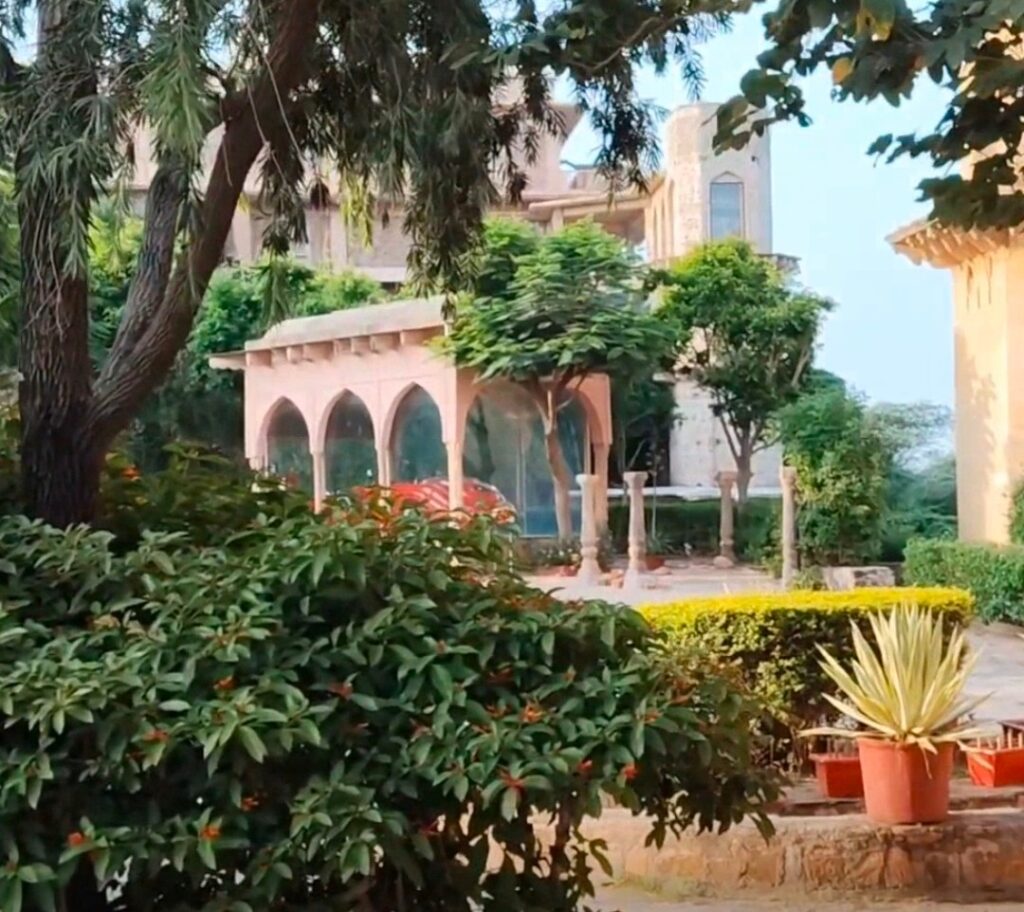
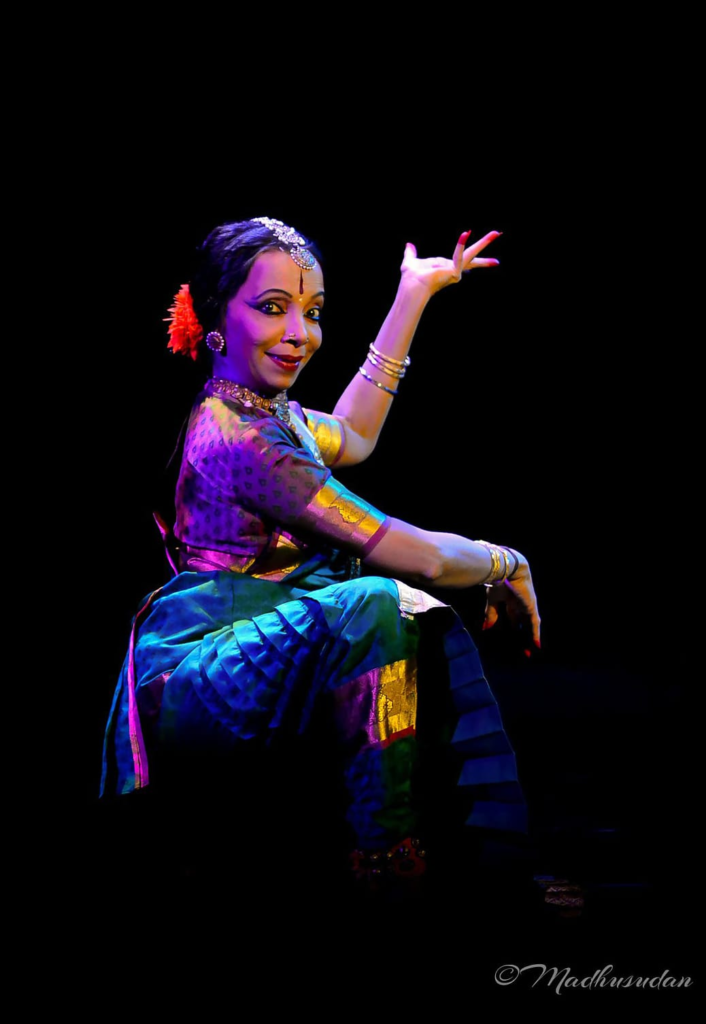
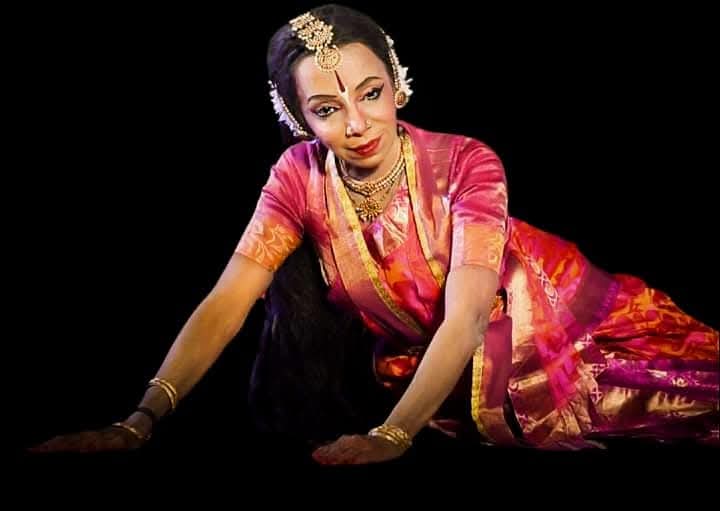
It was within this sublime architectural embrace, under their meticulous stewardship, that the audience witnessed a transcendent evening of artistic mastery. On September 26, the sacred stones of the fort bore witness to a performance that will be remembered as a high-water mark of the festival. Presenting her one-hour solo thematic Bharatanatyam production, “Radha: Dhara of Life,” the phenomenal Lata delivered a masterclass in artistic stamina, intellectual depth, and
transcendent devotion. The evening opened with a pristine Pushpanjali set to the intricate rhythms of Sankeerna Triputam. This initial opening track bore the definitive master touch of the brilliant Shri Satish Krishnamoorthy on the mridangam,instantly establishing the exceptionally high technical and rhythmic caliber of the recital. From this vibrant beginning, the production seamlessly transitioned into its core thematic narrative. The Yamuna River emerged as a timeless narrator, its rippling currents beautifully evoked by Lata’s fluid architecture of movement.
Through the Yamuna’s voice, the performance distilled the vastness of creation into the two foundational syllables: Ra and Dha. Lata unpacked this linguistic mystery with exquisite precision, demonstrating how Radha is not merely a figure of myth, but the eternal Dhara—the cosmic current of life itself. The Yamuna drifted on stage, yearning for that ancient heaven again,
subtly urging modern mankind to distance themselves from today’s overwhelming digital noise and truly connect to one another. To ensure these profound philosophical layers were accessible to all, Lata utilized a highly skillful English commentary. This spoken word narrative was woven elegantly between the dance segments, guiding the audience deep into the spiritual heart of the choreography without ever breaking the performance’s hypnotic spell. The emotional and technical centerpiece of the evening was an elaborate Varnam format, a breathtaking canvas where Radha eulogized her divine counterpart, Krishna, lacing together sacred verses from the Gopi Geetam and Bilvamangala Swami’s Srikrishna Karnamrutham. Lata approached this complex narrative with an artistic authority that left the courtyard spellbound. The piece was punctuated by intricate Jathis that demanded absolute geometric perfection. Lata’s pure dance (nritta) was sharp, commanding, and delivered with an unflagging stamina and energy that seemed to draw strength from the ancient fort itself. In a masterstroke of theatrical
storytelling, the Varnam reached its breathtaking conclusion as Krishna takes leave of Radha, declaring unto her his grand purpose. He implores Radha to depart with him, but she chooses to remain back in the sacred landscapes of love, vowing to seek him in the flowing waters of the Yamuna and along the slopes of Vrindavan. She chooses to anchor her devotion in memory, visualizing him forever with a peacock feather as his crown and the humble reed as his weapon.
Before departing, Krishna hands over his very flute to Radha, decreeing that the cosmos will
forever remember him not alone, but eternally as Radha-Krishna.
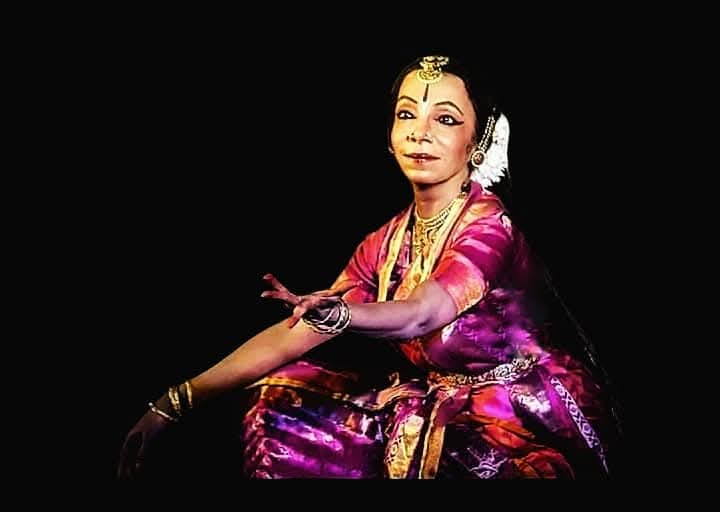
Following the emotional grandiosity of this parting, the performance moved into a soul-stirring exploration of the composition “Nee Mattume Yen Nenjil Nirkkiraai” (You Alone Stand in My Heart). Featuring deeply evocative lyrics written by the acclaimed Tamil author and poet Perumal Murugan, this segment allowed the imaginative choreographer in Lata to truly shine. Instead of portraying Radha in a state of desolate abandonment, Lata depicted her etching her own completeness within. This was the realization of Advaita—a non-dual oneness where all external quests end, and an immutable experience of inner wholeness begins. Lata masterfully brought to life a Radha who realizes that nothing can erase what is enshrined within the temple of her heart. Moving in a state of mystical trance—a sublime suspension between sleepy wakefulness and
wakeful sleepiness—she becomes entirely Krishnamayi Radha. Through her abhinaya, Lata etched the absolute beauty of true lovers who endlessly renew definitions of unending love, reminding the audience that within every human heart lies a temple housing both Krishnamayi Radha and Radhamayi Krishna. As Lata observed, transforming a physical location into a living
temple is a task as profoundly challenging as it is deeply inspiring. It requires the creation of an entirely new dimension—a sacred space where the witnessing audience willingly suspends all disbelief to be transported across centuries. On this night, that is exactly what occurred. The physical world dissolved, and the entire audience was carried away to the ancient banks of the river Yamuna in Dwaparayuga, discovering a heaven on earth right within the walls of Tijara. The evening culminated in a thrilling master strike—a marathon Thillana charged with the ecstatic chant of Radhe Radhe. Pinpointed by the powerful, lightning-fast footwork that has long been Lata’s legendary forte, the performance built to an electric crescendo. As Lata executed the demanding rhythmic patterns with unwavering brilliance, the witnessing audience sat completely
transfixed. Here, on the ancient grounds of Tijara, stood a legendary dancer whose six and a half decades of unswerving sadhana utterly shamed age as a mere number. It was a transcendental display of artistic longevity, proving that a life dedicated to dance becomes a cosmic fountain of youth, transforming classical dance into a pure visual prayer. Every witnessing heart was successfully transported to Vrindavan, a true heaven on earth. Lata’s stellar performance was elevated by an exceptional musical ensemble that created a mesmerizing sonic landscape. The vocals by the mellifluous Shri NN Siva Prasad soared into the night sky, carrying the emotional weight of the verses directly into the hearts of the audience. The rhythmic foundation was ironclad yet brilliantly dynamic, anchored by the crisp, authoritative Nattuvangam rendered by the late guru Shri S.P. Srinivasan, and perfectly matched by the resonant, driving beats of Shri Chandran on the mridangam. Melodic brilliance swirled through the fort’s open courtyards through a stunning instrumental dialogue: the hauntingly mesmerising flute by Shri Bharat Raj remained as enchanting as ever, beautifully conversing with the evocative, soulful strains of the violin by Shri Satish Seshadri, weaving a divine atmosphere reminiscent of Vrindavan. This entire sensory transport was made complete by the brilliant execution of the logistics team, led by the General Manager, the dedicated efforts of program assistant Jayashree Bahl, and the highly evocative lighting design by Banwarilal, whose sensitive
illumination complimented the shifting moods of various scenes perfectly. In its entirety, “Radha: Dhara of Life” was a monumental achievement, illustrating perfectly how the vision of Amarnath and Ashish Khokar successfully ensures that India’s artistic legacy remains an active, roaring
flame.
Dr. Lata Surendra
(Bharatanatyam Exponent, Teacher, Choreographer, Writer, Curator, Independent Researcher, Dance journalist
and in the field of dance over six and half decades)