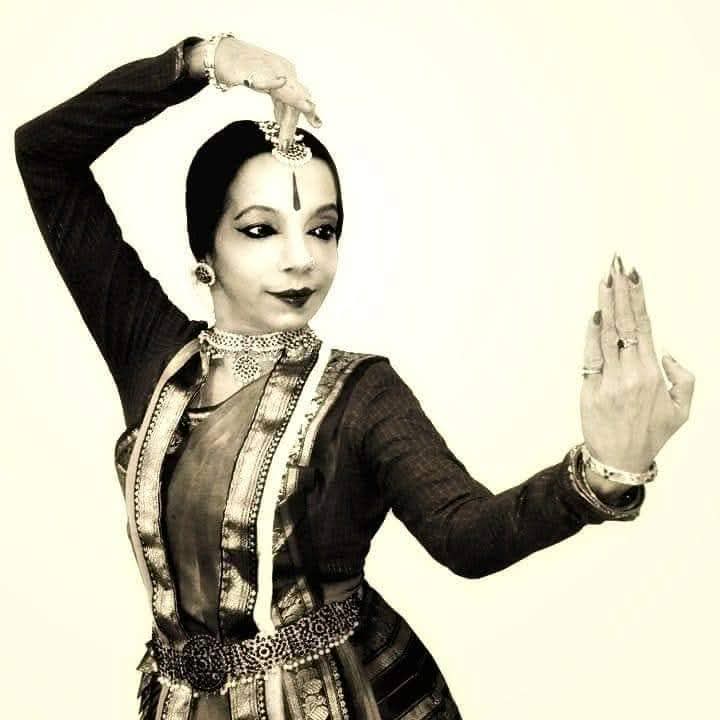

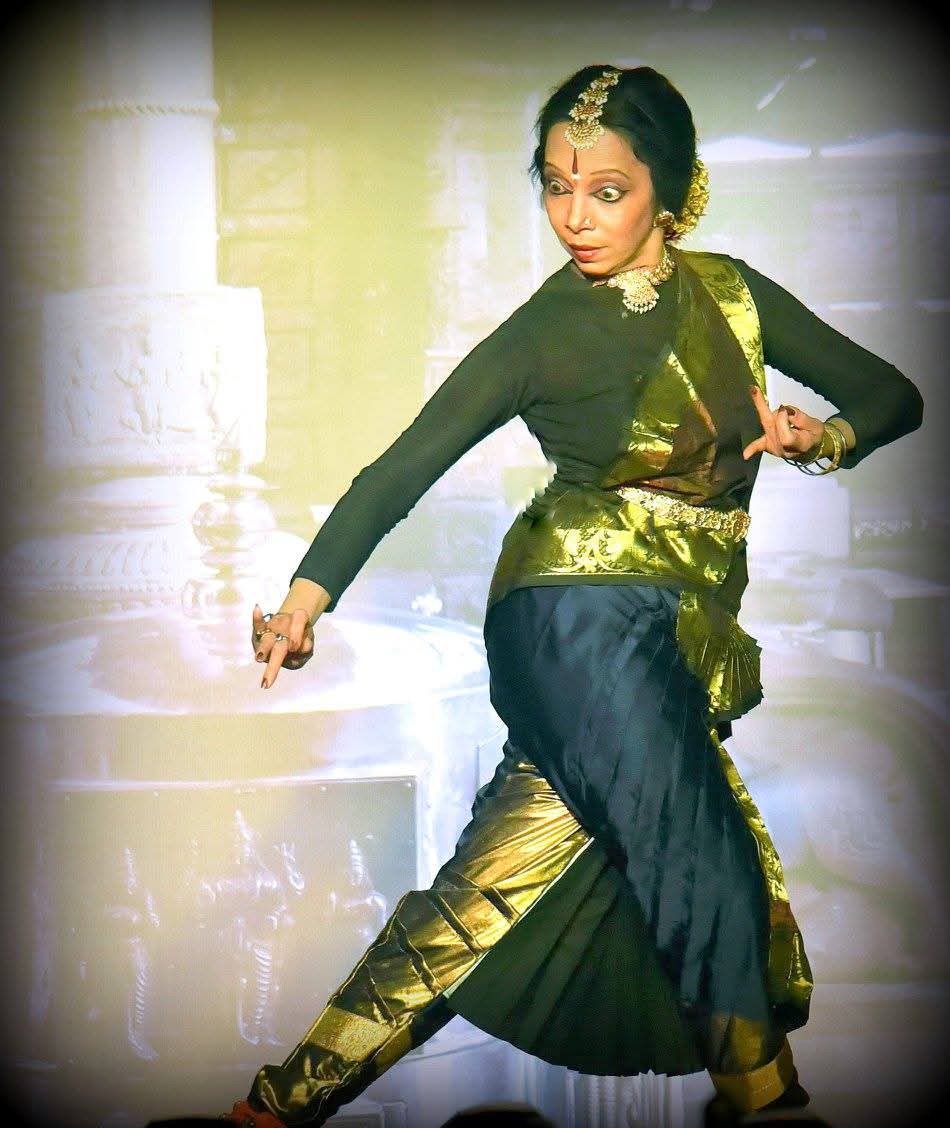
This paper investigates the profound metaphysical, mathematical, and physiological architecture of the number nine within Hindu traditions, mapping its manifestations across cosmic symbols, natural elements, and classical arts. By focusing specifically on the structural geometry of the classical dance form Bharatanatyam, this study illuminates how the human frame transforms into a living mandala. It correlates the intricate networks of seventy-two thousand nadis, or vital energy channels symbolized by the ceremonial offering of the betel leaf or tambula, with the numeric digital reduction to nine. Furthermore, the analysis explores how the compression of cosmic forces is mirrored ritualistically in the deployment of the betel nut or supari within the navagraha grid, and scripturally through the planetary, durga, and nagic slokas with systematic textual references. Finally, this work details how a conscious dancer strategically maneuvers these geometric templates, moving from the chaotic action-reaction outbursts of unawakened daily life into a disciplined aesthetic focus. Through the precise kinesthetic activation of the navarasas, or the nine fundamental expressions, the performer initiates a deep neurological catharsis that cleanses the neural pathways of both dancer and spectator. The final resolution into shanta rasa, or absolute peace, represents the ultimate spiritual baseline where all worldly passions are spent, and the macrocosm seamlessly merges with the universe within.
The structural framework of ancient Eastern metaphysics rests upon the fundamental postulation that the universe outside, the macrocosm, and the universe within, the microcosm of the human body, are governed by a single, unyielding mathematical blueprint. Within this vast architecture of sacred geometry, the number nine operates not merely as an arbitrary quantitative digit, but as the ultimate geometric threshold of cosmic completion. It represents the perimeter of the manifest world, the final evolutionary boundary before the manifold expressions of creation collapse back into the primordial zero of unmanifest pure consciousness. In both mathematical philosophy and spiritual treatises, the number nine serves as an absolute envelope that holds the cosmic parameters intact.
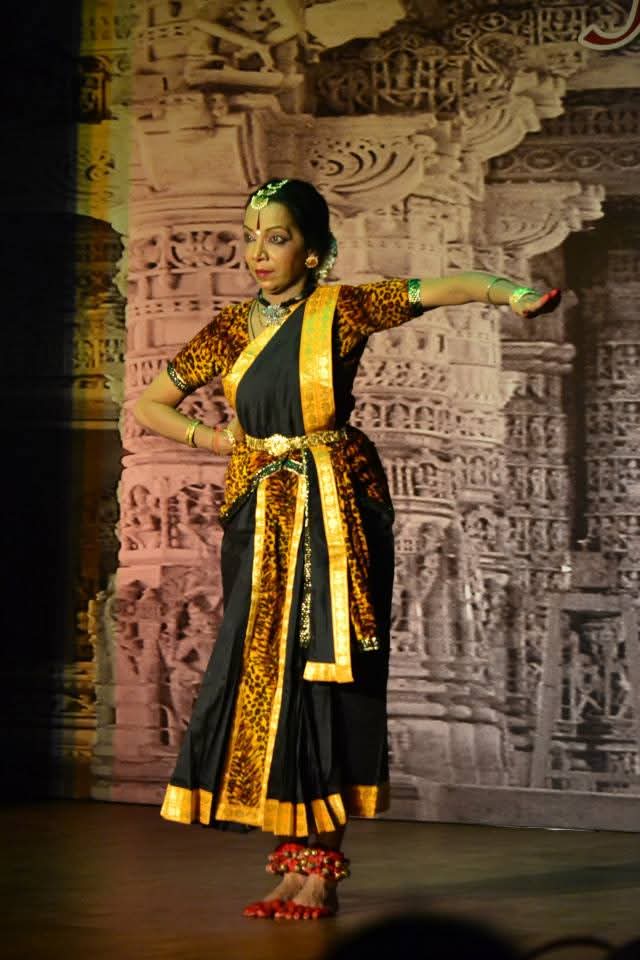
When this sacred, multi-layered numeral is breathed into the classical geometry of the ancient dance form of Bharatanatyam, the performance completely ceases to be a display of human aesthetics and instead becomes a colossal, strategic manipulation of universal life force. The human frame, operating as a biological canvas, traces vectors, triangles, and circles in space, mapping out an ancient matrix that directly interacts with the subtle body’s inner energy channels. By analyzing this deep correlation between spatial mathematics, biological pathways, and emotional aesthetics, we uncover a rigorous, therapeutic science designed to liberate the individual from the debilitating, reactive patterns of day-to-day existence, ultimately resolving all human passions into a state of absolute, unshakeable inner peace.
To fully comprehend the depth of this system, one must first explore the mathematical and ritualistic foundations where the number nine manifests as the signature of structural wholeness. Universally, within the decimal system, nine holds a unique, immutable digital root property. Any multiple of the number nine, when its individual digits are added together, invariably reduces back to nine itself. For example, multiplying nine by five yields forty-five, which sums to nine; multiplying nine by twelve results in one hundred and eight, which again reduces perfectly to nine. This mathematical behavior mirrors a self-contained, infinite cycle where the cosmos endlessly expands into numerical complexity yet remains eternally anchored to its singular, primary source.
In Hindu traditions, this principle of structural completion is explicitly encoded throughout the cosmic order. It governs the Navagraha, the nine celestial nodes that hold the rhythmic fabric of time and space in balance. It defines the Navaratri, the nine sacred nights dedicated to invoking the cosmic feminine energy, which represents the progressive stages of spiritual transformation. It forms the core of the sacred number one hundred and eight, which dictates the number of beads on a japamala and, crucially, maps the one hundred and eight karanas, or foundational dance transitions, performed by Lord Shiva as Nataraja.
This multi-layered architectural deployment of the sacred nine is immortalized in the Devi Kavacham from the Markandeya Purana, which maps the evolutionary stages of cosmic creation through the text of the Nava Durga sloka:
प्रथमं शैलपुत्री च द्वितीयं ब्रह्मचारिणी ।
तृतीयं चन्द्रघण्टेति कूष्माण्डेति चतुर्थकम् ॥
पञ्चमं स्कन्दमातेति षष्ठं कात्यायनीति च ।
सप्तमं कालरात्रिश्च महागौरीति चाष्टमम् ॥
नवमं सिद्धिदात्री च नवदुर्गाः प्रकीर्तिताः ॥
Prathamam Shailaputri cha Dvitiyam Brahmacharini |
Tritiyam Chandraghanteti Kushmandeti Chaturthakam ||
Panchamam Skandamateti Shashtham Katyayaniti cha |
Saptamam Kalaratrishcha Mahagauriti chashtamam ||
Navamam Siddhidatri cha Navadurgah Prakirtitah ||
The absolute literal translation states: First is Shailaputri, the daughter of the mountain; second is Brahmacharini, the ascetic pursuer of divine wisdom. Third is Chandraghanta, the sound of cosmic rhythm, and fourth is Kushmanda, the divine spark of the universal egg. Fifth is Skandamata, the nurturing mother, and sixth is Katyayani, the fierce warrior. Seventh is Kalaratri, the eternal night of transformation, and eighth is Mahagauri, the radiance of pure peace. Ninth is Siddhidatri, the giver of absolute perfection and mastery. These nine forms are celebrated together as the Nava Durga. [Reference: Markandeya Purana, Devi Kavacham, Chapter 1, Verses 3-5, Gita Press Edition, Page 42, Text 3-5]
This macrocosmic configuration of nine cosmic forces is not a distant, abstract reality; it is folded neatly and precisely into human anatomy. The subtle body is sustained by an intricate, sprawling network traditionally calculated as seventy-two thousand nadis, the energetic conduits through which prana flows. When this expansive anatomical network is passed through the mystic filter of Vedic digital reduction, the number seventy-two thousand reveals its true structural frequency, as seven plus two plus zero plus zero plus zero reduces perfectly to the sacred nine.
These internal pathways are intimately connected to the nine bodily openings, which serve as sensory gates to the external world, and are governed internally by the nine primary pranic currents known textually as the Nava Nagas. The ancient Nava Naga Stotram preserves this anatomical and environmental mapping:
अनन्तं वासुकिं शेषं पद्मनाभं च कम्बलम् ।
शङ्खपालं धृतराष्ट्रं च तक्षकं कालियं तथा ॥
एतानी नव नामानी नागानां च महात्मनाम् ।
सायङ्काले पठेन्नित्यं प्रातःकाले विशेषतः ।
तस्य विषभयं नास्ति सर्वत्र विजयी भवेत् ॥
Anantam Vasukim Shesham Padmanabham cha Kambalam |
Shankhapalam Dhritarashtram cha Takshakam Kaliyam tatha ||
Etani Nava Namani Naganancha Mahatmanam |
Sayamkale Pathennityam Pratahkale Visheshatah |
Tasya Vishabhayam Nasti Sarvatra Vijayi Bhavet ||
The translation reads: Ananta, Vasuki, Shesha, Padmanabha, and Kambala; Shankhapala, Dhritarashtra, Takshaka, and Kaliya—these are the nine sacred names of the great-souled cosmic forces. Whoever recites these nine names regularly in the evening, and especially in the early morning, will remain untouched by the toxic stagnation of internal and external poisons, achieving victory and balance across all spheres of existence. Within the human frame, these nine nagas represent the fluid dynamics of prana moving through the energy channels, regulating the nervous centers and preventing the psychological accumulation of toxic emotional waste. [Reference: Sri Nava Naga Stotram, Traditional Text, Verses 1-3, Kalyan Stotra-Anka, Page 112, Text 1-3]
This profound anatomical mapping is preserved and celebrated in everyday Indian rituals, most notably in the offering of dakshina, where a token of gratitude is placed upon a fresh, green betel leaf, known as tambula. The betel leaf is not an arbitrary botanical choice; it is a stunning, living replica of the human subtle body. If one examines the leaf closely, a prominent, rigid central spine is visible, running from the base to the apex. From this central axis, an incredibly complex, hyper-intricate matrix of fine veins branches out laterally to the very perimeter of the leaf.
In Vedic symbology, this botanical architecture maps the sushumna nadi, the primary central canal of spiritual consciousness running through the human spinal column, while the lateral veins represent the seventy-two thousand nadis that distribute life force across the biological frame. When an aspirant accords dakshina, they are not merely offering material wealth; they are symbolically laying their entire energetic network, their thoughts, actions, and prana, at the altar of the divine preceptor. The ancient protocols dictate that the leaf must remain entirely whole, and its central spine must never be torn, reminding the practitioner to honor the unbroken, integrated flow of life energy within.
Resting directly atop this leaf in the ritual of dakshina is the betel nut, or supari. While the open, vibrant leaf represents the fluid, subtle channels of life force, the dense, unyielding betel nut represents the hard, compacted shell of the human ego, the calcified worldly passions and karmic bondages that must be broken down and surrendered. Here, too, the number nine reveals its absolute sovereignty. In the performance of traditional Vedic rituals, particularly during the Navagraha puja, when metallic idols of the nine planetary deities are unavailable, priests position nine individual betel nuts in a precise geometric grid upon the altar. Each individual supari becomes a high-density sensory anchor, consecrated to hold the specific, intense vibration of a cosmic node. The betel nut is thus utilized as a physical vehicle to compress, contain, and organize the chaotic forces of the universe, rendering the abstract geometry of the cosmos accessible to human consciousness.
The classic scriptural invocation that anchors this planetary grid is recorded by Sage Vyasa in the Navagraha Stotram, which honors the nine celestial forces:
आदित्याय च सोमाय मङ्गलाय बुधाय च ।
गुरुशुक्रशनिभ्यश्च राहवे केतवे नमः ॥
Adityaya cha Somaya Mangalaya Budhaya cha |
Guru Shukra Shanibhyashcha Rahave Ketave Namah ||
This verse translates as follows: I offer my profound salutations to Aditya, the Sun; to Soma, the Moon; to Mangala, Mars; and to Budha, Mercury. I bow down in deep reverence to Guru, Jupiter; to Shukra, Venus; to Shani, Saturn; and to the cosmic nodes Rahu and Ketu. Through this invocation, the ritual space transforms into a living matrix, mirroring the precise alignments of the heavens within a localized, sacred circle. [Reference: Vyasa Maharsi, Navagraha Stotram, Dhyana Shloka, Verse 1, Vedavyasa Granthavali, Page 15, Text 1]
When a classical dancer steps onto the stage to perform Bharatanatyam, they are effectively stepping into this consecrated cosmic grid, fusing the energetic blueprint of the tambula leaf with the compressed mathematical power of the supari. The dance functions as a dynamic, physical invocation where the kinesthetics of the performance directly activate the latent cosmic templates within the human biology. Through nritta, the aspect of pure, abstract dance, the performer’s body ceases to be a mere physical vessel and is transfigured into a dynamic lightning rod. The dancer establishes the foundational posture of araimandi, a precise half-seated stance where the knees are bent outward, the heels are brought together, and the spine remains perfectly erect along the vertical axis.
In the realm of sacred geometry, this highly calculated stance creates a series of three interlocking triangles that converge exactly at the navel, the body’s physical center of gravity and pranic power. The first triangle is drawn from the broad line of the shoulders tapering down to the navel; the second triangle extends from the navel outward to the wide, bent knees; the third triangle is traced from the knees down to the firmly grounded heels.
As the choreography unfolds, the kinesthetics of pure dance activate the internal network of the seventy-two thousand nadis. The rhythmic stamping of the feet sends kinetic shocks up the legs, unblocking the base centers where the subtle energy rests. The arms stretch into absolute horizontal lines, the fingers form mudras that act as energetic seals, and the joints of the elbows, wrists, knees, and ankles slice through empty space, creating an array of acute, obtuse, and right angles. This is not done for superficial visual pleasure. It is an ancient, calculated science of energy optimization. By placing the physical limbs at precise mathematical angles relative to the earth’s gravitational pull and the sky’s expansive space, the dancer systematically minimizes internal energetic drag and maximizes the upward surge of prana. The physical frame becomes a vector field, a living mandala in motion. These external lines act as conduit pipes that systematically apply pressure to the subtle anatomy, forcing the dormant life force trapped within the seventy-two thousand nadis to unblock, cleanse itself of stagnation, and rise smoothly up the sushumna nadi along the central spine, completely awakening the dormant pathways of the Nava Nagas within.
This conscious, strategic manipulation of physical energy stands in stark, diagnostic contrast to the way human movement and emotion are spent in the chaos of day-to-day life. In the unawakened, ordinary state of existence, human movement is rarely conscious; it is almost entirely reactive. Lacking deep self-awareness, the average individual operates from a victim state, perceiving external events as things that happen to them rather than around them. An unexpected obstacle instantly breeds deep anxiety, a critical remark from a peer sparks sudden anger, and an unfavorable circumstance triggers immediate despair.
Because the ordinary individual lacks a conscious, structured container within their own psyche to hold and process these intense emotional currents, the energy manifests as violent, jagged outbursts or, conversely, as heavily suppressed mental stagnation. This constant, uncontrolled ping-pong of action and reaction wreaks havoc on the physical biology. The nervous system is repeatedly flooded with stress hormones, keeping the body in a perpetual state of fight-or-flight.
More damagingly, because these day-to-day emotional reactions are never fully witnessed or processed, their residual energy pools and hardens within the seventy-two thousand nadis. This toxic emotional stagnation creates blockages in the subtle body, which eventually precipitate downward into the physical framework, manifesting as chronic illnesses, nervous exhaustion, psychosomatic pains, and systemic inflammation. The daily movements of an unconscious life become biologically expensive and deeply destructive, chipping away at the body’s health because the physical tissues are forced to store the heavy trauma that the mind refuses to consciously process.
The actor or classical dancer, however, operates from a completely different paradigm of consciousness. The artist understands that emotions are not permanent identity markers or uncontrollable forces; they are simply raw, neutral streams of prana waiting to be masterfully sculpted. On the stage of awareness, the dancer never suppresses an emotion, nor do they allow themselves to be possessed or victimized by it. Instead, they occupy the seat of the sovereign observer, cultivating a state of intense, hyper-vigilant witness consciousness.
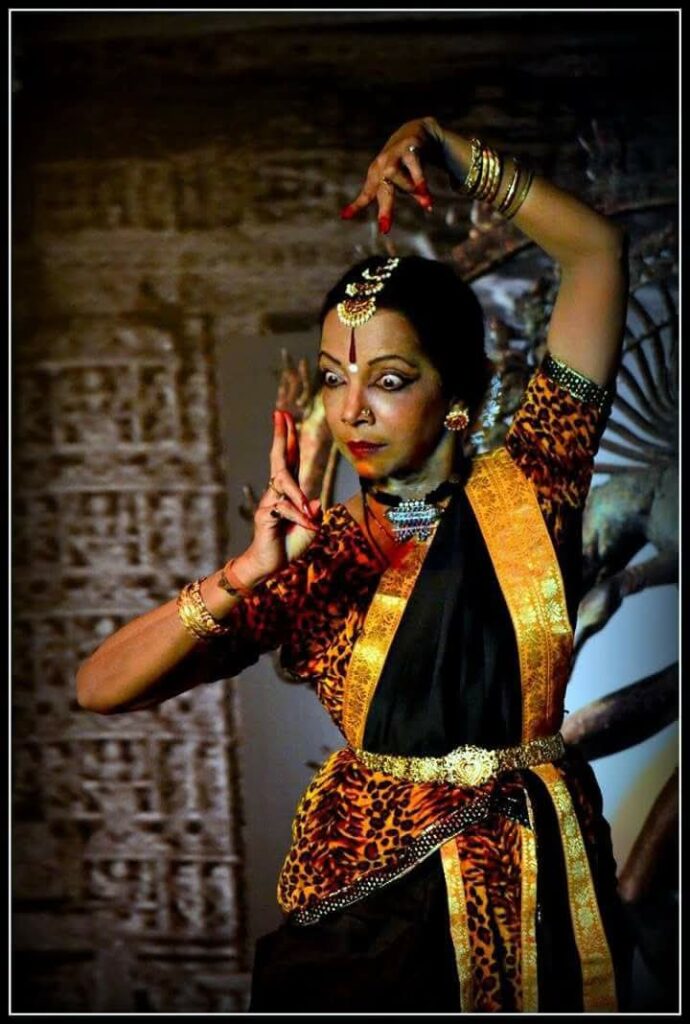
When a performer portrays raudra, a state of furious rage, or bhayanaka, a state of intense terror, they do not actually become angry or terrified in a personal, destructive sense. They stand detached, watching the emotional frequency rise within their creative field. Because they are anchored in absolute awareness, they can skillfully maneuver this energy. They take the volatile, destructive fire of anger and safely channel it into a sharp, geometric extension of the arm or a thundering, rhythmic stamp of the foot against the earth. They take the heavy, paralyzing weight of grief and dissolve it into a fluid, melting downward curve of the spine.
Every emotion is granted an impeccable, geometric outlet. It is a controlled, conscious burn where the feeling springs from a deep well of internal awareness, achieves a flawless, mathematical form through pure dance, and is then completely, cleanly relinquished. The artist maneuvers the matrix of the body to ensure that no emotional residue is left behind to decay the inner nadis.
This deliberate process of emotional transformation reaches its absolute aesthetic and therapeutic zenith through the systematic execution of the Navarasas, the nine fundamental expressions that map the entire spectrum of human experience. These nine rasas, which include shringara (love), hasya (laughter), karuna (compassion), raudra (anger), veera (heroism), bhayanaka (fear), bibhatsa (disgust), adbhuta (wonder), and shanta (peace), are far more than theatrical tools. They are specific sonic, visual, and energetic frequencies that directly target the neurocentres of the human brain.
As the dancer cycles through these expressions, a profound neuro-catharsis is initiated. The performance intentionally guides both the artist and the spectator through the turbulent waves of the psyche. The intense presentation of these contrasting states forces a deep, neurological purging of stored anxieties and chaotic imprints. By witnessing each passion amplified and purified through sacred geometry, the spectator’s own internal blockages are systematically vibrated loose.
As the performance nears its conclusion, the stormy, conflicting frequencies of the first eight emotions completely exhaust themselves through the sheer intensity of their conscious expression. Having been given a perfect form and fully witnessed, they burn out, leaving no toxic debris behind. They dissolve seamlessly into the ultimate, pristine ninth state, which is Shanta Rasa, the baseline of absolute, unshakeable tranquility.
This sublime transition is beautifully captured in the classical aesthetic treatises, often summarized by the iconic verse from the Abhinaya Darpana, which outlines the total integration of the dancer’s attention and physical movement:
यतो हस्तस्ततो दृष्टिर्यतो दृष्टिस्ततो मनः ।
यतो मनस्ततो भावो यतो भावस्ततो रसः ॥
Yato hastas tato drishtir yato drishtis tato manah |
Yato manas tato bhavo yato bhavas tato rasah ||
The literal translation states: Wherever the hand goes, the eyes must follow; wherever the eyes travel, the mind and intense focus must be present; wherever the mind is fully centered, the true emotional state or bhava arises; and where the bhava is perfectly manifested, the pure aesthetic flavor, the divine rasa, is born. Through this absolute alignment of gesture, vision, mind, and emotion, the chaotic action-reaction loops of daily life are completely silenced. [Reference: Acharya Nandikeshvara, Abhinaya Darpana, Verse 247, Chowkhamba Sanskrit Series, Page 85, Text 247]
When the dancer achieves this perfect internal state, the boundaries between the performer, the performance, and the viewer completely evaporate. A sacred, palpable stillness blankets the space. Enveloped in this cathartic shroud of pure awareness, the mind falls entirely quiet. The heavy, calcified ego, represented by the hard betel nut, has been completely offered up and dissolved upon the vibrant, geometric network of the subtle nadis, represented by the betel leaf. The stormy passions of worldly existence are fully spent, leaving both the dancer and the witness resting effortlessly within the luminous, silent vacuum of the universe within. This is the ultimate gift of the sacred nine, an ancient, enduring science that leverages the precise geometry of classical dance to transform human suffering into radiant health, and chaotic emotion into pristine, eternal peace.
Kalashri Dr Lata Surendra
(Bharatanatyam Exponent, Teacher, Choreographer, Writer, Curator, Independent Researcher, Dance journalist
and in the field of dance over six and half decades)