
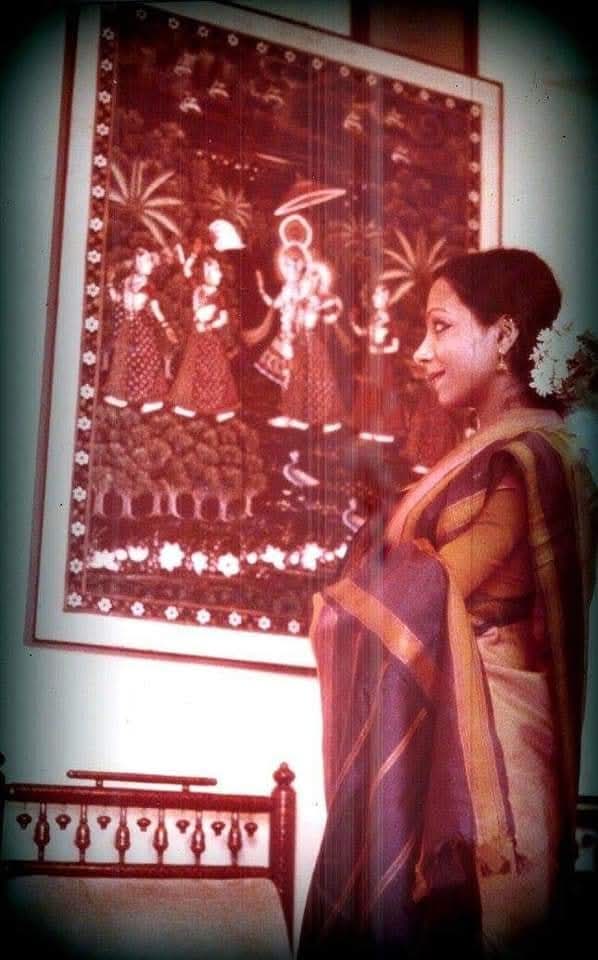
Khadi for me is not just a fabric… a cloth… a texture! It is a heartbeat. It is a lineage. As I salute the hands that weave our nation’s loom, I am saluting a power that goes far deeper than craft. These hands do not just cross threads— they truly interlace my destiny, your destiny, our destiny, and the very soul of India!
When the charkha spun during our struggle for independence, it didn’t just twist raw cotton into yarn. It did something miraculous: it spun fractured lives into a unified movement. It gave my ancestors a voice. It was a fierce, quiet declaration of human dignity. Every uneven knot, every slight imperfection, and every ridge in the fabric are the unmistakable fingerprints of the artisan. They are the marks left by the true custodians of our heritage.
The alchemy truly belongs to the weavers. More than seventy percent of these incredible artisans are women. I think of them sitting before their wooden looms, their fingers dancing across the warp and weft with an instinct passed down through generations. They aren’t just making a living; they themselves are woven directly into our national memory. With every single push of the shuttle, they transform raw, earth-grown fiber into a tapestry of my national pride.
I remember Dad highlighting Gandhi’s thoughts that true freedom begins when we sustain the hands closest to the earth. Gandhi highlighted, “Khadi is the sun of the village solar system. Its orbit includes all other aspects of the village life.” Khadi was his foundational image of Ahimsa (non-violence)—a peaceful weapon that made the poorest villages starvation-proof. When I choose Khadi, I align with Gandhi’s core truth.
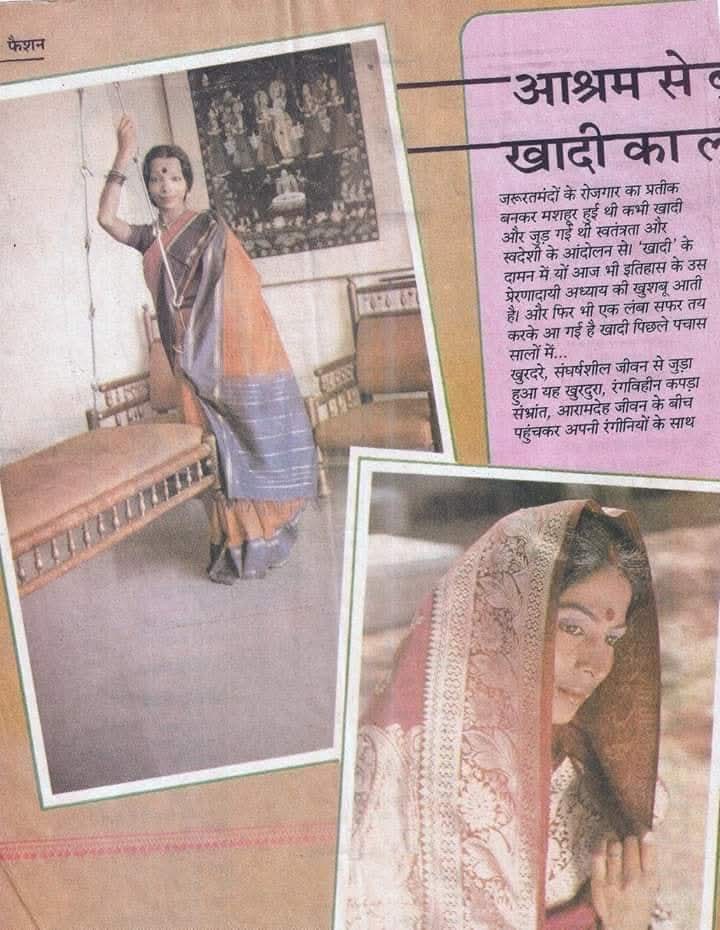
But Dad was the one who introduced me to the world of books… of the penmanship of great minds. Thus it was that I shared a secret romance with all whose language breathed poetry. I am yet fascinated by that Chachaji who had
me Discover India with fresh eyes. Nehru looked at the coarse texture of Khadi and saw poetry in motion. He gave the fabric its most evocative and enduring title: “Khadi to me is the symbol of unity of Indian humanity, of its economic freedom and equality and, therefore, ultimately… ‘the livery of India’s freedom.'” In fact, Mahatma Gandhi himself was so moved by Nehru’s phrasing that he wrote to him, saying this “enchanting phrase” would live as long as the language itself.
But the ultimate poet in my heart I loved was the one and only Gurudev Rabindranath Tagore whose words touched, stirred, and had me awaken to love an idol and connect to the magic of language as the gentle weapon and a bridge! While Gurudev Rabindranath Tagore famously debated Gandhi on the compulsory politics of the charkha, his reverence for the handloom weaver was deeply romantic and profound. Tagore did not want the loom to become a tool of blind, mechanical obedience; he demanded it remain a canvas for supreme artistic freedom. At his beloved Santiniketan university, he made wearing
handwoven fabrics a celebration of cultural dignity. In his timeless verses, he writes of the craft with a sweeping, cosmic reverence: “Poets are weaving for you a web with threads of golden imagery… giving your form ever new immortality.”
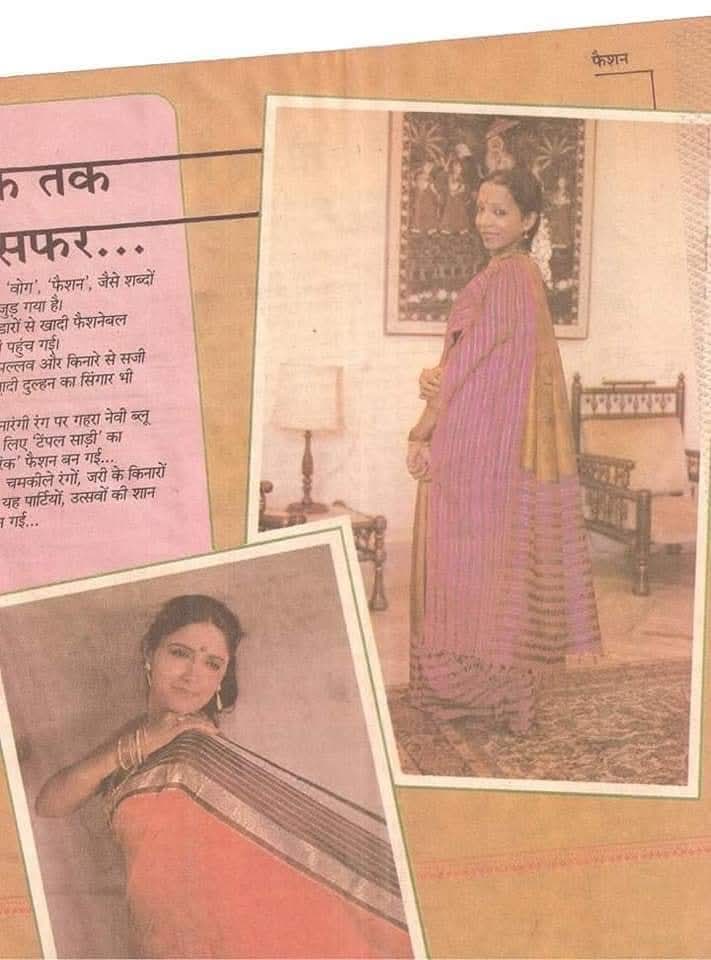
How very evocative and stirring. To Gurudev, handloom cotton was a visible manifestation of philosophy, balancing the raw grit of human labor with the boundless beauty of the mind.
In any case, my rooting history, my birth seven years post-Independence when national sentiments coursed through the veins of all Indians, my dad’s powerful influence, and the poets all shaped my outlook and made me aware of who I truly am. As an Indian, Khadi today is my personal endorsement of the human touch over a soulless machine. Strangely, today, it has become a luxury—but a luxury born entirely out of simplicity, carrying the raw, beautiful fragrance of our
freedom.
We do not sacrifice our taste or our standard of elegance just because mass production makes cheap alternatives easy to reach. True sophistication is not about a price tag; it is about what we value. When a choice connects directly to our roots, our sentiments must take priority. Sentiments make us human and are ever so vital. They are the emotional anchor that keeps us grounded in who we are. Let us refuse to relegate our heritage to cold museum glass or fleeting calendar dates.
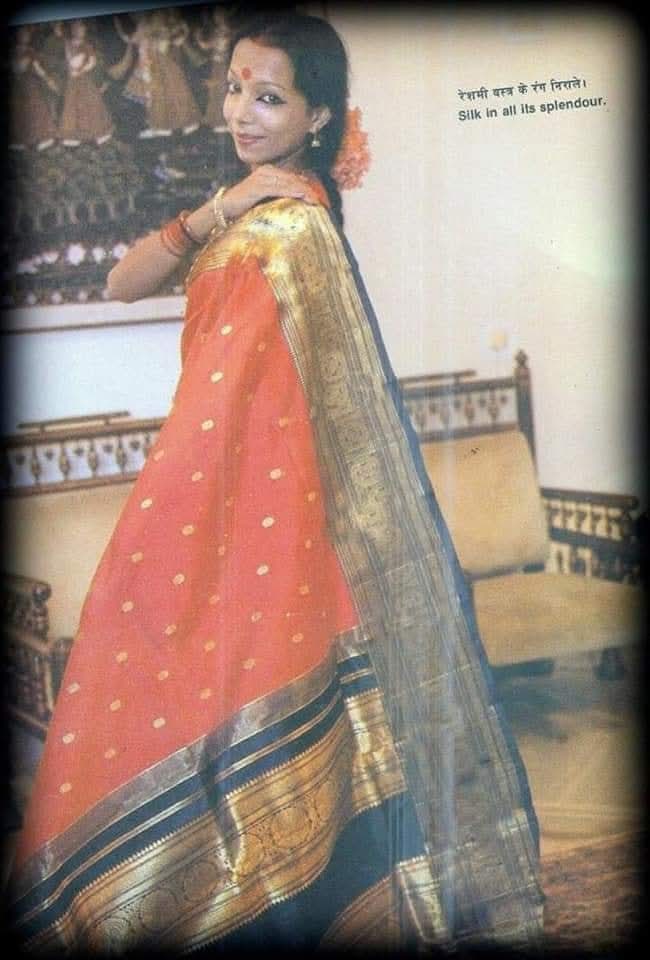
Look closely at the tricolour that defines us. Synthetic dyes can mimic the shades, but they can never replicate the soul. A machine-made flag simply matches the wind, but a Khadi flag breathes the very air of freedom. The saffron is not just a pigment; it is the burning sacrifice of our ancestors woven by hand. The white is not a bleached void; it is the pure, unblemished peace of an honest livelihood. The green is not a plastic sheet; it is the fertile soil of our villages, spun into reality by our women.
Draping Khadi may perhaps be beyond one’s reach, but we can always reach out to a Khadi flag to have our reaching eyes gather its caress with a sense of national pride.
A Khadi flag does not just fly; it speaks. It scores a definitive victory over every mass-produced, synthetic imitation because it carries the heartbeat of the people who built this country. It honors our taste, satisfies our standards, and protects our collective memory. It scores a victory over every mass-produced imitation because it carries the heartbeat of the people who built this country. Beyond colours, for me it’s only a flag in hand-spun Khadi that can caress free skies and hold the weight of a nation’s freedom.It is a simple choice catering to a pocket with a king-sized heart of an Indian.
Today, as our beloved Prime Minister echoes the call of Har Ghar Tiranga, let us ground that vision in the soil from which it grew. Let every home rise, but let it rise with a Khadi Tiranga—so that as our flag flies high, we also eulogise the hands that wove our history are the very hands we uplift into the future.
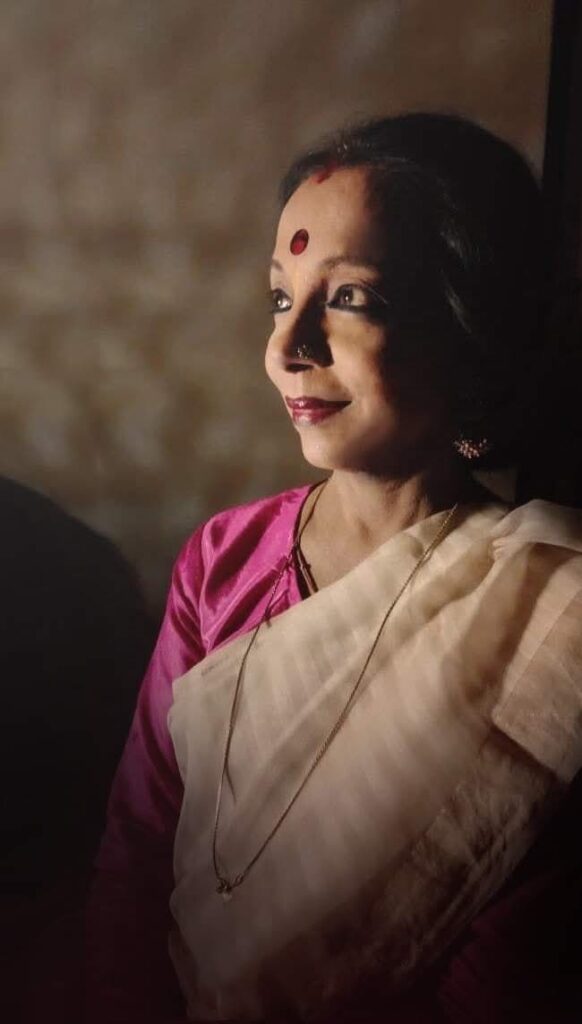
Kalashri Dr Lata Surendra
(Renowned Bharatanatyam Exponent Teacher Choreographer Writer Curator Independent
Researcher DanceJournalist and in the field for over Six and half decades !)
Lata’s uncle, Dr. G. Ramachandran, was a notable Gandhian constructive worker, freedom fighter, and social reformer who served as the Chairman of the All India Khadi and Village Industries Commission (KVIC).This stirring narrative as world celebrates KHADI is conceptualised by Kalashri Dr. Lata Surendra.
Through landmark curatorial properties like the Swadeshi Runway in collaboration with Fashion queen and champion of Swadeshi – Ms Sonia Mayers , she has consistently bridged the visceral world of classical dance with the rhythmic cadence of Indian thought including handlooms. To her, a garment is never mere ornamentation; like dance, the loom vibrates with an inherent music and rhythm, acting as a living extension of our national memory.