

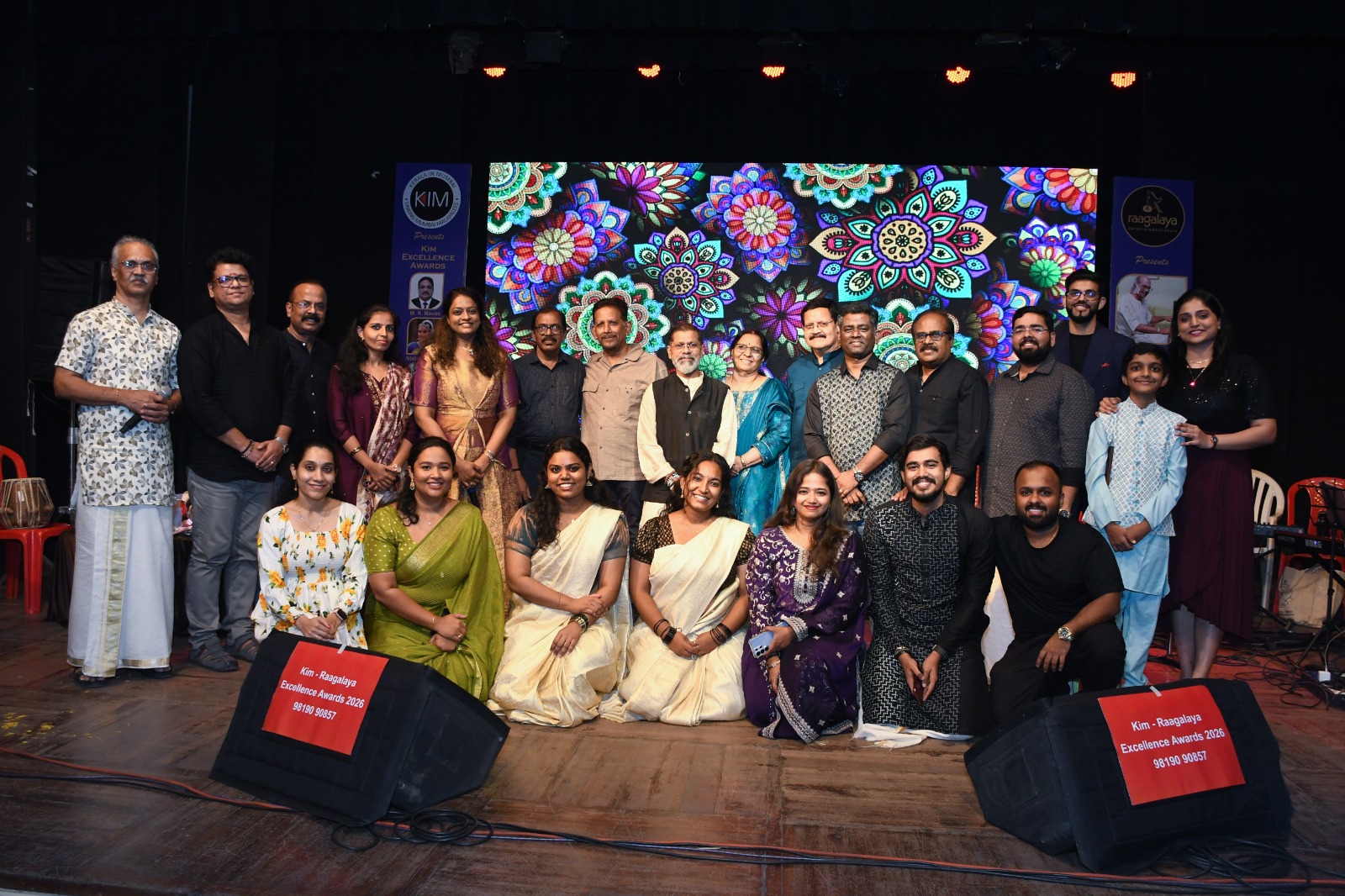
When Music Refused to Imitate Machines: Raagalaya’s Living Tribute to Salil Chowdhury In an age where technology has increasingly taken over the live stage, genuine musical performance has become something of a rarity. Today, audiences are often presented with programmes built around karaoke accompaniments, pre-recorded +1 tracks and programmed sessions, where singers deliver their portions over machine-perfect backing while musicians merely create the visual impression of performance.
The glamour may remain, but the spontaneity, vulnerability and emotional electricity of true live music are often absent. Against this backdrop, the Raagalaya Music Awards 2026, held on Saturday, 11th April 2026, in Mumbai, emerged as a deeply heartening reminder of what live music can still achieve when entrusted to committed singers, disciplined musicians and organisers who believe in authenticity over convenience.
Organised by Mr. Vijay Kumar P. V., founder of , the event was not merely another awards ceremony. It unfolded as a carefully curated cultural evening that placed melody, musicianship and emotional sincerity at its centre. More importantly, it gave the audience an opportunity to experience a kind of live orchestral performance that has become increasingly uncommon on today’s public stages.
The undisputed highlight of the evening was a special musical tribute presented in memory of the late — one of Indian music’s most original and sophisticated composers. Salil Chowdhury was never a composer of simple tunes alone; he was a master architect of orchestration, harmony, rhythm and mood. His songs are layered, structurally intricate and emotionally nuanced. To attempt his music casually, or worse, through mechanical backing tracks, would have reduced their very essence. Raagalaya recognised this and chose instead to honour him through the most fitting medium possible: a fully live orchestral
presentation.
Every song in the Salil Chowdhury tribute was performed live.
That single decision elevated the evening from a routine commemorative segment into a musically immersive experience. The audience was not merely hearing familiar melodies replayed; they were witnessing songs being built in real time — phrase by phrase, beat by beat, breath by breath. The cueing of the singers, the live responses of the rhythm section, the gentle melodic interventions of the flute, the chordal textures from the keyboards and guitar — all these combined to create that unmistakable organic energy that only a real orchestra can generate.
Rendering these immortal melodies were a talented and varied line-up of vocalists: Preethi Warrier of Asianet Idea Star fame; Shivshankar Krishna, winner of Flowers Top Singer Season 5; along with Aravind Kuttikrishnan, Amrutha Nair, Ashwin Nambiar, Girija Vijaykumar, Sidharth Deshpande and Reshma Menon. Each singer brought his or her own tonal quality to the songs, but what stood out most was the collective sincerity with which they approached Salil Chowdhury’s compositions. There was no unnecessary dramatization, no over-stylised stage gimmickry — only a visible respect for the music itself.
Behind the singers stood a committed and finely coordinated orchestra led by Vichoo Iyer, whose musical leadership held the entire tribute together with confidence and restraint.
Leading a live orchestra is never merely a matter of giving entries; it requires maintaining the emotional spine of the performance, balancing the singers, shaping transitions and ensuring that every instrumental voice contributes to the larger musical narrative. Vichoo Iyer fulfilled that role admirably while also lending beautiful tonal colour on guitar.
He was ably supported by Abhilash and Marina on keyboards, Kumar on tabla, Haridas Nair and Ravishankar on rhythm pads, while Anirudh on flute provided moments of lyrical softness that floated delicately over the ensemble.
It must be emphasised that Salil Chowdhury’s songs are not easy stage numbers to reproduce. Their unusual chord movements, layered harmonies, changing rhythmic patterns and intricate orchestral detailing demand far more than surface familiarity. They require rehearsal, disciplined listening, mutual trust and a deep understanding of the composer’s emotional architecture. This was not a casually assembled medley. Considerable preparation had clearly gone into every arrangement, and the seriousness of that homework was evident in the final presentation.
What made the orchestra particularly impressive was that it never functioned like a programmed backing unit. It behaved like a listening ensemble. The musicians watched one another, left breathing spaces where needed, supported the singers without overwhelming them and allowed each song to unfold naturally. This quality of musical attentiveness is precisely what distinguishes live performance from technological simulation, and it was deeply appreciated by the audience.
The evening was gracefully anchored by Sreekumar Mavelikara, whose easy stage command and warm presentation ensured continuity without interrupting the musical mood. Interestingly, during his anchoring he hummed a few lines on certain occasions, and those brief moments were enough to reveal that he possesses a remarkably pleasant singing voice. One could not help feeling that he too deserved at least one full song in the evening’s line-up. His spontaneous humming added an unexpected layer of charm and left many wishing to hear more.
A deeply emotional high point of the evening came with the presentation of the Raagalaya Lifetime Achievement Award 2026, posthumously conferred on . The honour was received on behalf of his legendary father by his son , Sanjoy Chowdhury, from noted musician and Hindi film music arranger , R. S. Mani. It was a moment rich in memory and symbolism — one generation receiving, through another, the continuing gratitude of music lovers.
There could hardly have been a more fitting tribute. A composer remembered for his orchestral brilliance was honoured not through technological shortcuts, but through a live ensemble that made every note feel earned.
Special credit must go to organiser Mr. Vijay Kumar P. V. for conceiving and executing such a programme. At a time when convenience often overrides commitment, mounting a fully live orchestral presentation involves rehearsal schedules, musical planning, financial investment and, above all, faith in the audience’s ability to appreciate authenticity. Raagalaya’s effort proved that such faith is not misplaced. Because when music is genuinely live, audiences do not merely hear it.
They participate in it.
Their applause becomes fuller, their silence becomes deeper, and the memory of the performance stays with them far longer than any digitally perfect show.
The Raagalaya Music Awards 2026 will therefore be remembered not simply as another annual function, but as an evening that reaffirmed a timeless truth: when music comes directly from human voices, human hands and human hearts, it does not merely entertain.
It lives.
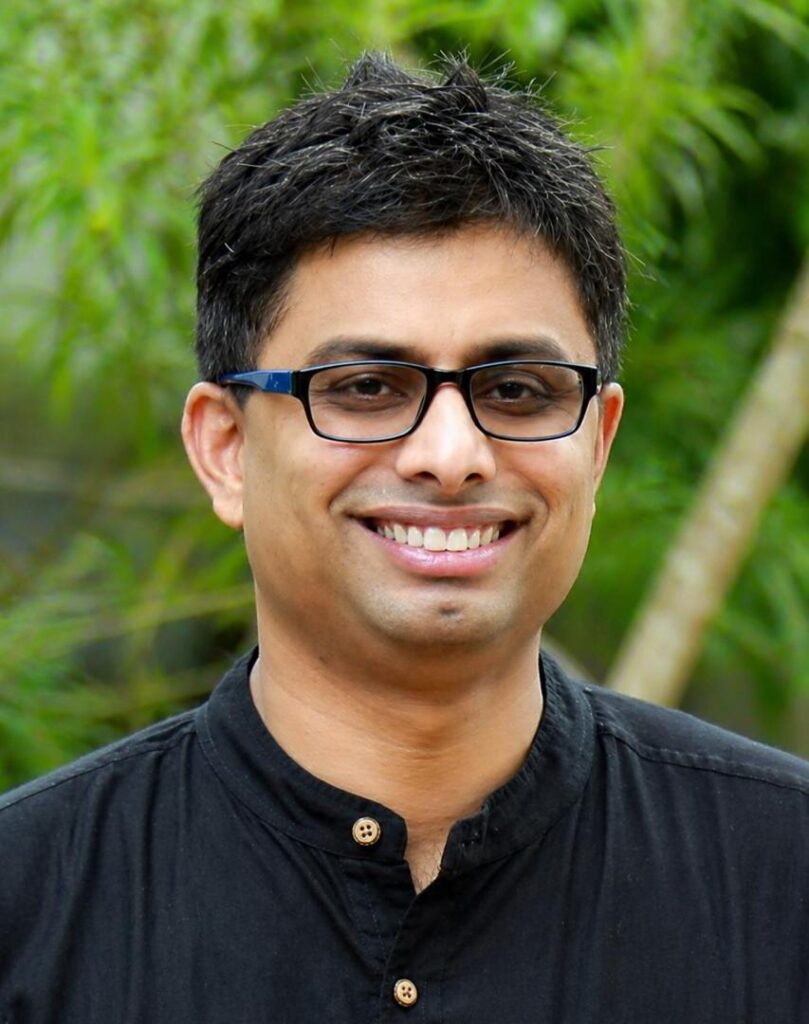
Reviewed By:
Vijay Thomas Kurien
About : Vijay Thomas Kurien has an experience over 25 years in music production technology, professional studio systems, music education, and live audio workflows, with associations including Whistling Woods International, Mukta Arts, and Qube Cinema. He coordinated the Election Commission of India’s Voter Awareness Anthem under Mukta Arts, served as a jury member for the IRAA Awards, and been a panelist at the PALM Expo on audio education and music technology. He is a recipient of the Dronacharya Award for Excellence in Audio Education and regularly writes on music production, live performance, and evolving music technologies.