

ODE TO YANTRA (Manifest Echo of the Sacred Heart); April 14, 2026
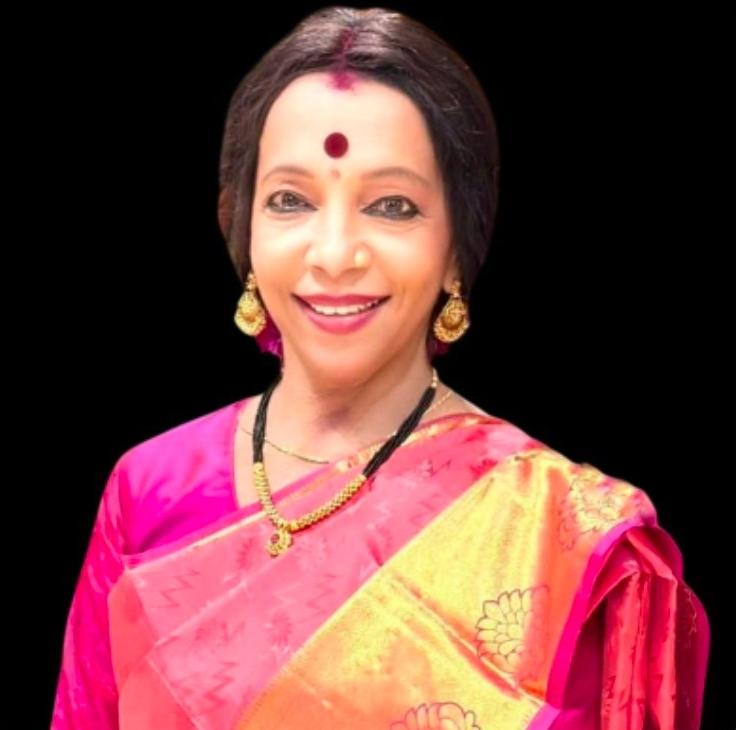
Curated by: Kalashri Dr Lata Surendra
Event in Collaboration with Dr Rekha Gour (All India Artists Association – Simla)
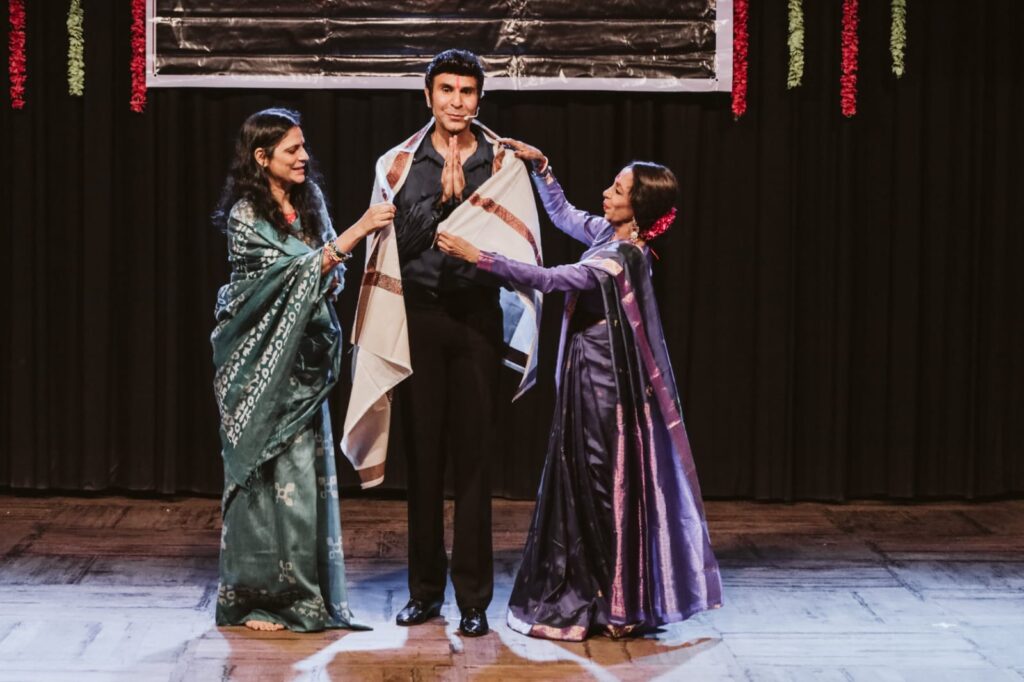
Presiding Guest
Shri Sandip Soparrkar
The prelude to the morning was set by the Presiding Guest the Monarch of Indian and Latin Ballroom, choreographer, actor, columnist, dance reality show judge, dance therapist, Ted X Speaker – Shri Sandip Soparrkarji who brought to life a few lines from the great philosopher Aristotle (335–323 BC) Poetics wherein the great Philosopher discussed extensively the purpose of Art. Shri Sandip Soparrkarji’s Sonorous voice and towering personality magnificently brought out the tussle between Art and wealth; ‘Art who only wished to rule hearts whilst wealth desired to rule the world Art ultimately wins because in Aristotle’s view Art is an end in itself, while wealth is merely a tool for other things. This dramatically presented piece set the pace for the exploring of Yantra – the theme set by Curator Dr Lata Surendra who is known to have dancers think different to drape a theme – to choreograph rather than ‘ch’oreograph.
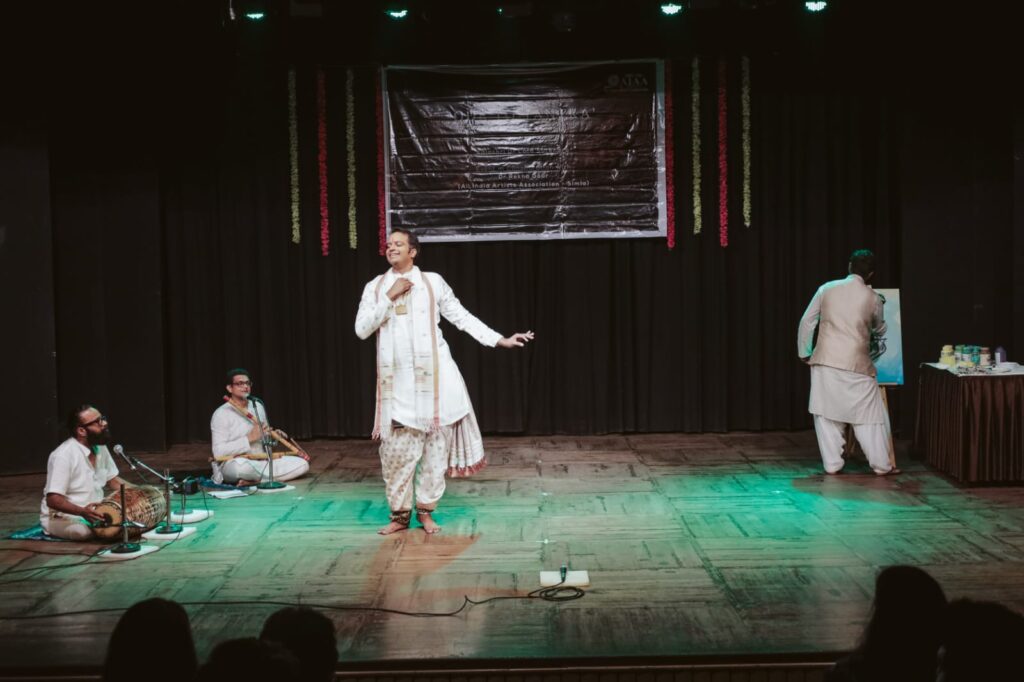
Saraswati yantra – through gayan,vadyam,Nartan & Chithram Concept by Dr Sunil Sunkara
The exploring opened out interestingly through the creation of Saraswati Yantra through Gayan, Vadan, Nartan and Chitram by Sunil Sunkara, Sumeet Patil and Satish Krishnamurthy. The sacredness of the Saraswati Yantra and Goddess Saraswati descended through a fourfold alchemy of the senses. Dr Sunil Sunkara is truly a thinking artist and one appreciated the thought given to a theme ever so evocatively. Through Gayan, the voice became a resonant geometric line, carving the void into celestial melodies that echoed the Yantra’s silent heart. In Vadan, the instrumentalist’s touch awakened the strings and skin to pulse with the rhythmic architecture of the cosmos, while Nartan breathed life into form, as the dancer’s geometry mirrored the Yantra’s interlocking petals in a fluid, living prayer. Finally, in Chitram, the silent stroke of the brush captured this divine resonance in pigment and gold, pinning the ephemeral vibration into a visual anchor for the soul.
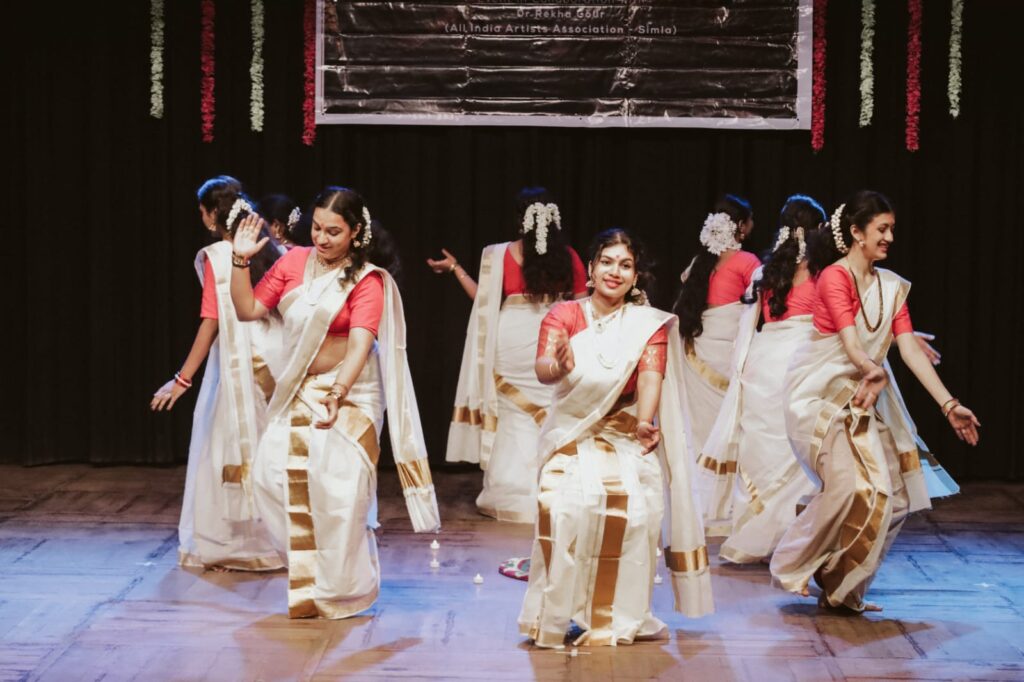
Kaikottikali – Sacred geometry of the circle choreographed by Dr Vijayshree Pillai
With the creative spark that is Dr Sunil Sunkara and the energy that is Satish Krishnamoorthy, the supportive caress of the flute, these artists did not merely perform; they dissolved the boundary between the seeker and the sacred, turning the Yantra into a multidimensional portal of eternal wisdom. Being the new year what better way to gather the beauty of Kerala than the Kaikottikali! Choreographed by Dr Vijayshree Pillai, a dance that brought out the sacred geometry with the circle coming to life through movements reminiscent of the caressing palms of Kerala choreographed aesthetically by Dr Vijayshree and complimented by her beautiful disciples – Greeshma, Nisha, Natasha, Angita, Rit, Aishwarya, Mrunal and Manju whose movements mirrored the intricate lines of a Yantra, transforming the performance floor into a living map of the cosmos. Like the interlocking triangles of a Sri Yantra that converge at a central point the graceful movements highlighted the symmetry around the cosmic Bindu—the silent, potent center from which all creation emanates.
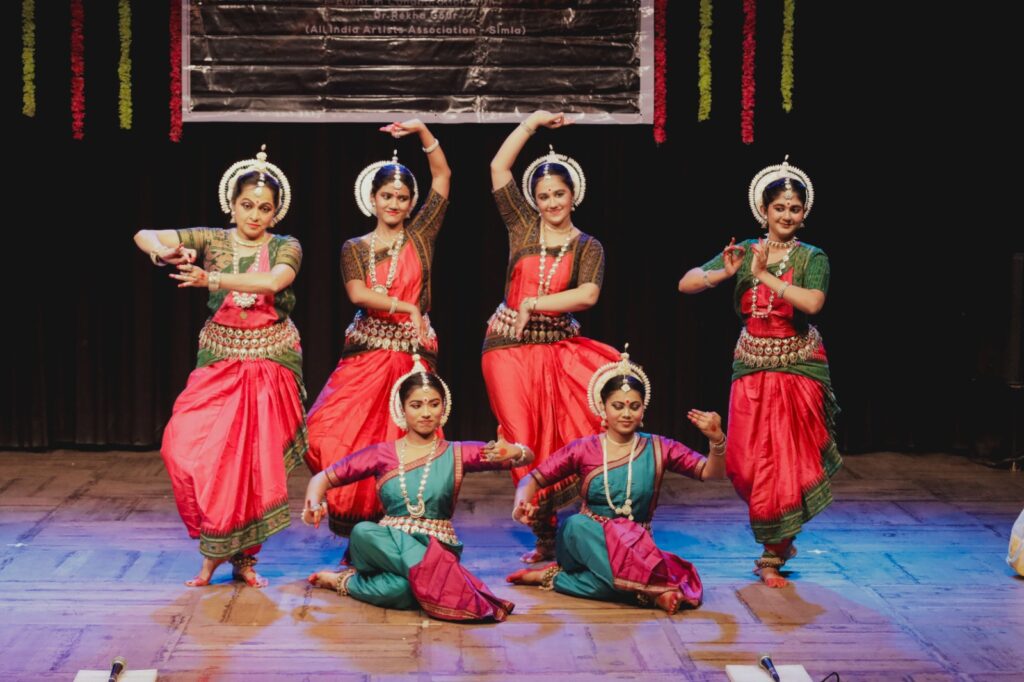
Dr. Sarmishtha Chattopadhyay
( Angik Dance Academy)
Dr. Sarmishtha Chattopadhyay (Angik Dance Academy) the city’s very creative choreographer, Teacher and Odissi exponent through her group- Meera Nambiar, Getikka Rao, Samyukta Raghavan, Siddhi Mhatre, Matrika Ghosh, Akshita Panigrahi reached out with Yantra: through Musical instruments – Mridangam, Flute, Manjira and Veena. Dance is music made visual and the well-coordinated dance endorsed how when the sangat – orchestral support awakened chords draping lyrics, the body that is energized dust transforms! Even as the instrument thrums to life as a sacred bridge of resonating wood and wire, it carries the dancer from the heavy dust of the earth to the luminous silence of the divine. Each beat of the dancer we realize is a heartbeat, each melody a whispered mantra guiding the body into expressions that laugh at the inadequacy of words. Through this vibrant harmony, motion abandons its physicality, transforming into a breath-taking prayer, a posture of pure devotion. In that flawless union of sound and motion, the dancer vanishes, and the soul finds its path to God. A signature Choreography by the imaginative choreographer Sarmishtaji.
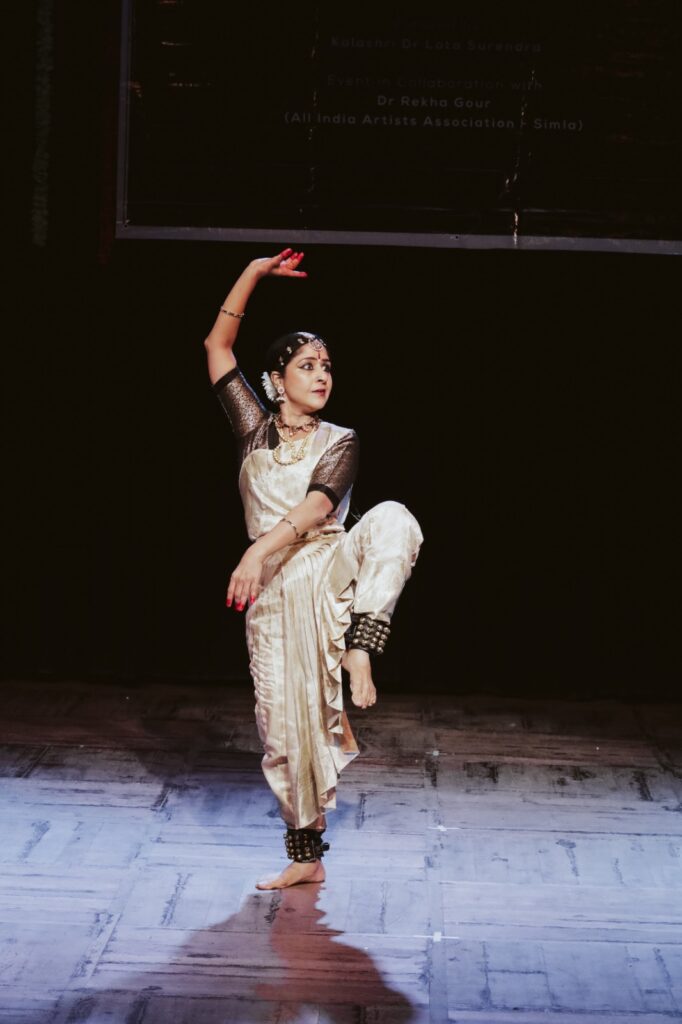
Sujatha Ramanathan – Shiva Yantra
Sujatha Ramanathan continued the Ode through an evocative and powerful defining of Shiva yantra invoking “Shivoham” through the Nirvana Shatakam by Adi Shankaracharya; a six-verse hymn that affirmed our true nature as pure consciousness. The dancer transformed to a living Shiva Yantra, a sacred geometry of flesh and spirit. Every mudra became a silent syllable of the Nirvana Shatakam, peeling away the layers of “I” until the ego dissolved like incense smoke. In this divine Aradhana. The body was no longer a prison of bone but a vessel of the Pancha Bhuta. As the feet struck the earth, they echoed the pulse of the cosmic rhythm, stirring the stagnant Chit into a whirlwind of awakening. Sujata did not just perform; she surrendered… shedding the mind and the senses at the Divine Feet of the Lord thus finding the ultimate and only path to Mukti. There was only the eternal resonance of Chidananda – the soul breathing its ultimate truth: Shivoham. Shivoham.
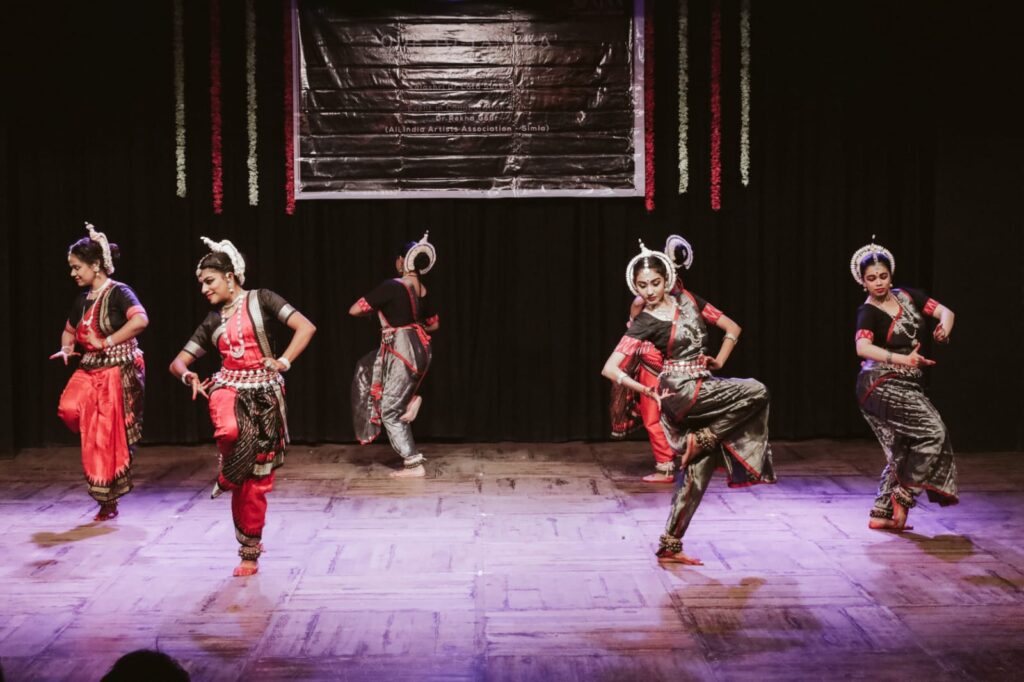
Disciples of renowned Odissi exponent Teacher Choreographer Guru Smt Nivedita Mukherjee (Aratrika Institute of Performing Arts) presented moksha – the rhythmic dissolution of the “I” into the “Infinite,” where the dancer’s body becomes a living conduit for the divine
Disciples of renowned Odissi exponent Teacher Choreographer, Guru Smt Nivedita Mukherjee (Aratrika Institute of Performing Arts) presented moksha. In the sacred geometry of the soul, Moksha is the final petal unfolding. It is the rhythmic dissolution of the “I” into the “Infinite,” where the dancer’s body becomes a living conduit for the divine. As the tempo accelerated, the boundaries of the self-shattered against the resonant beat of the Mardala, transforming movement into a transcendental stillness. The performance was truly a physical pilgrimage. Just as the Shri Yantra is a map of the cosmos -with its interlocking triangles leading the eye from the outer gates to the central dot (Bindu)- The fast-paced, pure dance choreography (Nritta) represented the complex layers of existence and the vibrant energy of the created world. Through the stirring choreography – the creative genius of legendary Guru Kelucharan Mohapatra and the vision of Guru Nivedita Mukherjee, the dancers navigated the sacred geometry of the stage, spiraling toward the center – the Bindu (The Point of Origin): The final invocation and the vibration of “Om” representing the return to the Bindu. Herein was the highlight as the geometry of light and shade merged. The music faded into Bhairavi, and the individual soul merged into the cosmic whole. In the sacred ambience of the centre stage light, the dance became a visual Yantra in motion, culminating in the ultimate liberation where form returned to the formless.
Sushri Guru Lata Bakalkar’s disciples (Aditi Nrityalaya) Riya Naik, Aditi Bakalkar, Tanmai Bakalkar, Meghana Varadkar, Mitali Shetye, Saumyaa Khot etched Damaru as Yantra through folds of Kathak. Between the stillness and the storm was the Damaru, the hour glass of eternity cinched at the waist. In the hands of the Great Weaver, Lord Shiva it came to light as the loom where the Yantra of existence is spun. Two hollowed skins face outward—one for the ‘echo of birth’, the other for the ‘silence of the grave’. The two sides became the twin peaks of duality: light and shadow, spirit and matter, the inhale and the exhale of the cosmos. As the leather struck the drumhead, the separate halves dissolved. In that rhythmic thunder, the “I” and the “Thou” crushed into a single vibration. This gave rise to the Nada, the primal sound that stitched the fractured world back together. Every beat was a reminder to all that this universe did not just exist; it danced in the tension between two sides, held together by the steady, unifying hand of the Lord who was both Destroyer and the creator. With Tabla by Swapnil Bhise, Vocals and Music by Krishna Bongane the item was very intense and graceful and beautifully co-ordinated. Kudos to the Guru Lata Bakalkar ji who has been quietly sculpting very many disciples in the field of Kathak.
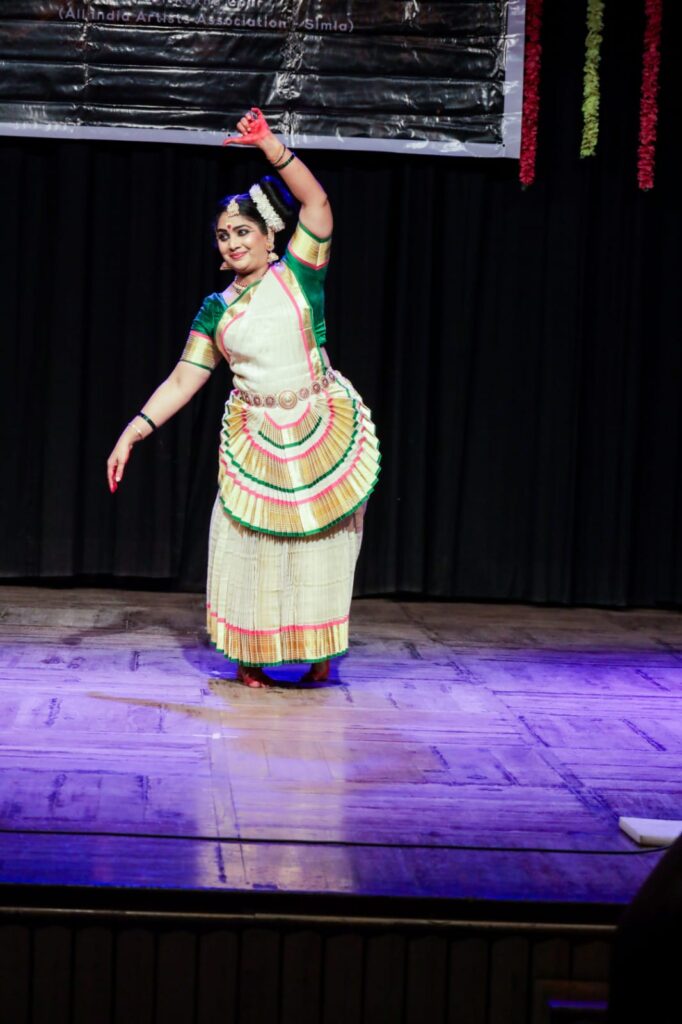
Meghna Arun – Mohiniyattam
And the Ganapati Yantra
Meghna Arun disciple of Guru Smt. Jayaprabha Menon, International Academy of Mohiniyattam, Delhi presented a powerful and uniquely choreographed piece etching the Ganapati Yantra. There was an intensity about her as she invoked Ganesha through beeja mantras. Here was an artist who was one with the art; whose truth was etched there on the centre stage as she carved the Yantra, as she invoked the Lord. She was there and yet not there. She was the tangible leading the soul to the intangible… Her eyes glazing with eloquence at that ‘still point of time where the dance absolutely was!
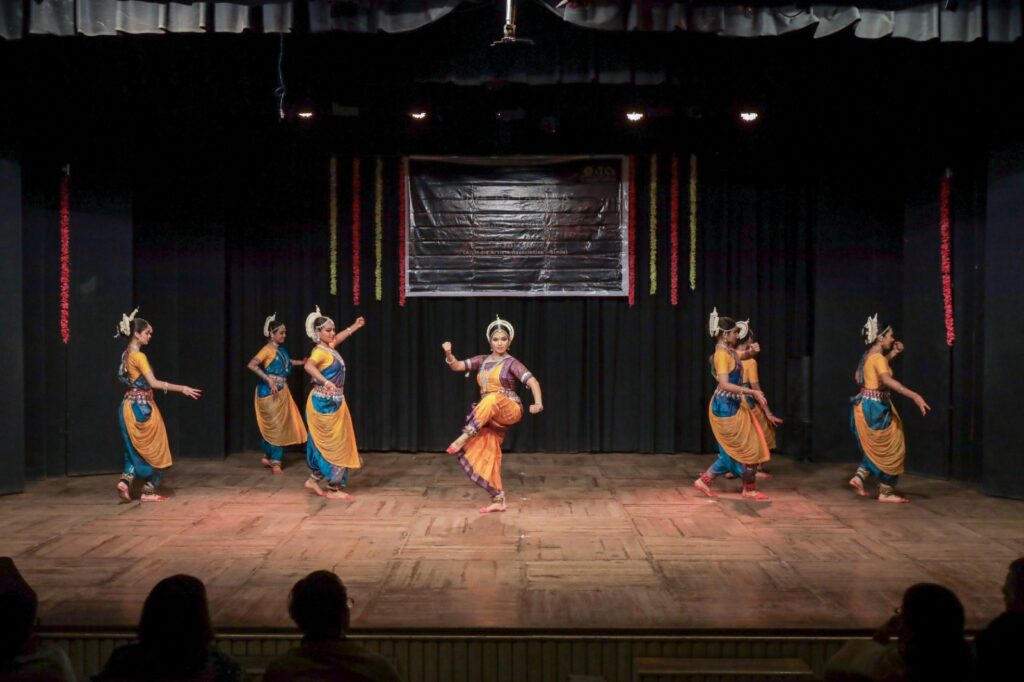
Mitali Varadkar (Sanskrita Foundation) disciple of Guru Smt Shubhada Varadkar with Avantika, Pragya, Shrija , Tanvi elaborated the Deviyantra
The city’s established renowned Odissi exponent Mitali Varadkar (Sanskrita Foundation) disciple of Guru Smt Shubhada Varadkar with Avantika, Pragya, Shrija, Tanvi elaborated the Deviyantra through “śive śṛṅgāra ārdrā” the 51st verse of the Soundarya Lahari penned by His holiness Adi Shankaracharya. “Yantraśṛṅgāra”- the sacred ornament of the Goddess’s expressions- specifically focused on how Her divine glance transformed according to whom She looks upon. With the ease coming with experience Mitali described the various emotional expressions, or nuances, in the divine glance of Goddess Parvati. The “Soundarya Lahari” verses came to life as not mere poetic constructs but as being encrypted with the profound secrets of Tantra and Mantra through the thoughtful and meditated upon choreography. The choreography was an offering to the Infinite. A reminder that we are held by an energy that is both the shield and the sword, the seed and the fruit- the all-encompassing primordial feminine energy that manifests as strength, prosperity, and wisdom. It reflected the unified presence of the Divine Mother in her many forms, guiding through creation and transformation.
Guru Dr. Nandhini Ashok (Shree Pavitra Arts Academy) presented Shakti Yantra highlighting the primordial feminine energy through the Shakti Yantra. The powerful yantra as we know is akin to the silent roar of the Divine Mother, where the static meets the ecstatic, and strength finds its home in stillness. Within these intersecting lines, prosperity was not merely wealth, but the blossoming of the spirit. Wisdom was not just knowledge, but the deep, intuitive rhythm of the heart. Dr Nandini Ashok and disciples elaborated Shakti’s dance of creation and the fire of transformation evocatively- a sacred balance that turned chaos into harmony and grace into power.
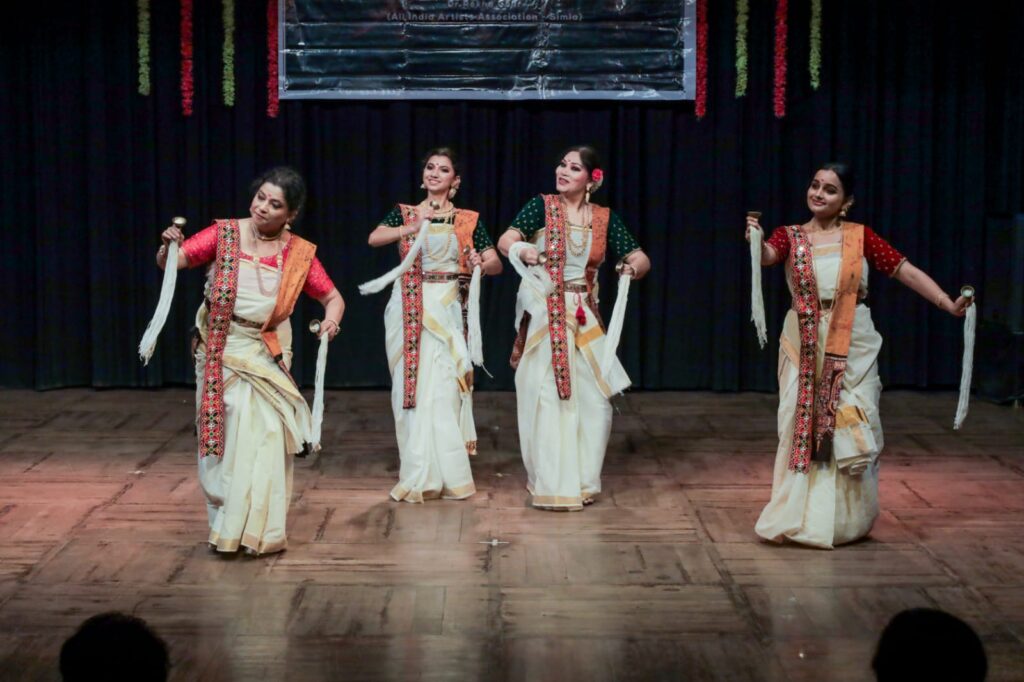
Manipuri Exponent Teacher Choreographer Purbita Mukherjee, (Baikali Association) with disciplesSudipa Ray,Arpita Roy Datta, Tamasi Samaddar very beautifully depicted the Yantra that is the human body itself through the body as Yantra and allegory of it to a flute through the stirring poetry of Tagore
Renowned Manipuri Exponent Teacher Choreographer Purbita Mukherjee, (Baikali Association) with disciples Sudipa Ray, Arpita Roy Datta, Tamasi Samaddar very beautifully depicted the Yantra that is the human body itself. Very skillfully Purbita chose the melodies of Tagore songs to interpret this. The beautiful lyrics awakened each Rasika to the allegory of the human body and the flute. Our physical form was so much like a flute – a simple reed waiting in the silence emptying everything within until God the eternal musician, breathes into it a meandering consciousness leading our awareness to the high hills and hidden valleys of our soul. With every dawn, His breath infuses into us fresh chords of awakening leading each of us to a new and meaningful page. Manipuri when performed as a group transforms as fluid Poetry and on the day, it quite simply found its way to all hearts.
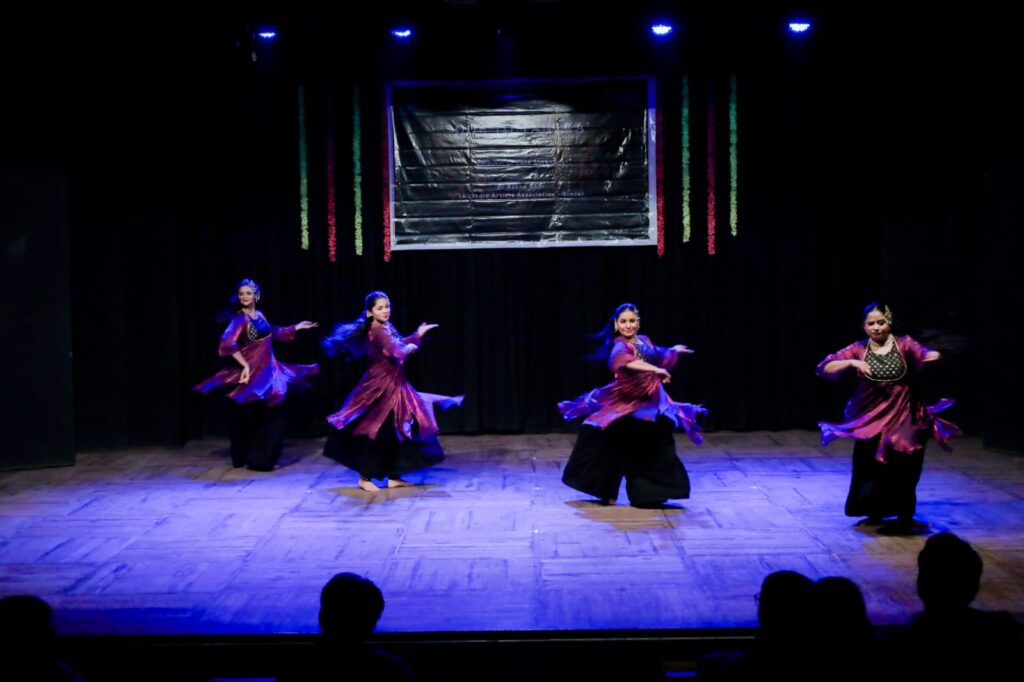
The bangle as Yantra – Concept by Aditya Garud presented by
Aditya Garud Dance Company & The Angikam dance foundation
Dancers -Harshada Borge, Manashi Jambekar, Vaibhavi Joshi and Yukta Joshi
Aditya Garud Dance Company & The Angikam dance foundation with the city’s tres imaginative, intense, dedicated Aditya Garud and team of dancers Harshada Borge, Manashi Jambekar, Vaibhavi Joshi and Yukta Joshi presented a unique choreography with the bangle as the yantra. At the hands of an imaginative choreographer a bangle transformed. It was no longer mere ornament; it was a yantra a geometric ritual cast in glass. It was a closed circuit where the pulse met its own echo. In its perfect, unbreaking curve, it mapped the geography of a life: the cold slip of memory, the fevered heat of desire, and the hollow ring of absence. To wear it was to enter a loop. The wrist one realized did not simply move; it orbited. Every chime against the skin was a summon, a quiet repetition that called the body back to its own ghosts. Like a finger tracing the rim of a bell, the wearer followed the line of what was, circling the void until the emptiness itself felt like a weight, a presence, a shape. Kangna by the young choreographer stole my heart that day. It was an excerpt from Aditya’s currently touring production- Ehsaas; a contemporary exploration in Kathak on longing.
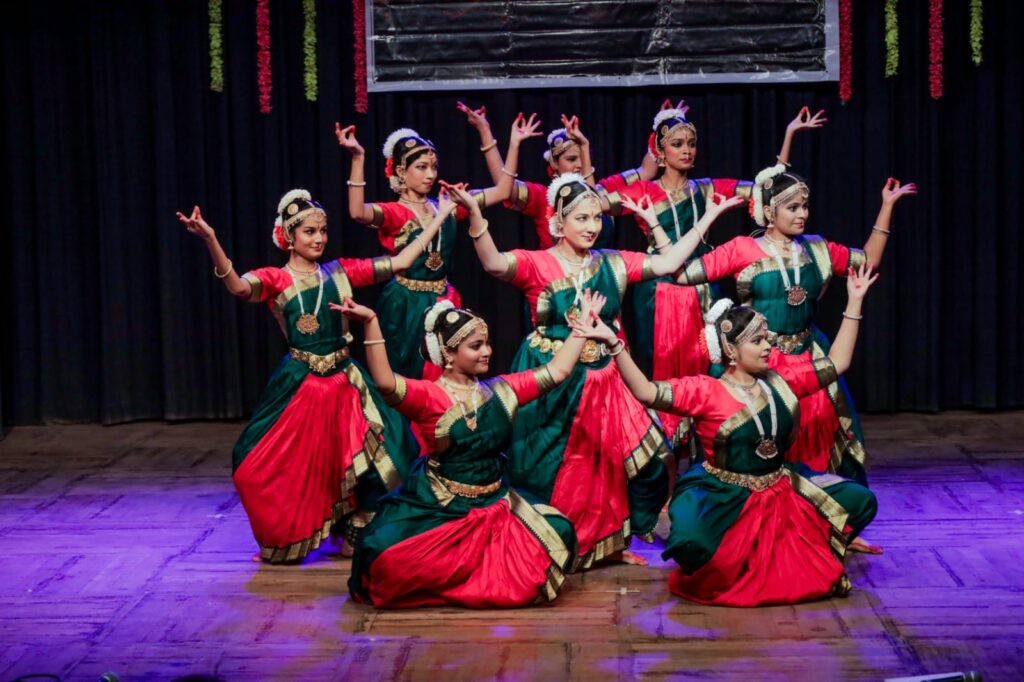
Pallavi P’s Natesh Art Foundation-Meera Manoj Murudkar, Bhairavi Tushar Bane,Bhargavi Tushar Bane,, Sharvari Shankar Girme,, Shubhra Vaishal Mhatre,, Swara shailesh shinde,
Avantika Pawar,Chaitali P. Madkaikar presented Sri Yantra.
The talented buds of imaginative Mentor Pallavi P’s Natesh Art Foundation – Meera Manoj Murudkar, Bhairavi Tushar Bane, Bhargavi Tushar Bane, Sharvari Shankar Girme, Shubhra Vaishal Mhatre, Swara Shailesh Shinde, Avantika Pawar, Chaitali P. Madkaikar presented Sri Yantra. The powerful choreography created the geometry from outermost square to 3 circles, lotus petals, triangles with the Devi herself in the form of Bindu at the centre of Sri Yantra. It depicted that the cosmic energy that resides in a dormant stage in the human body and when awakened within devotee channelized energy through the chakras to ultimately have the body become a living yantra.
Sushri Padmini Joshi of the Padanyas Nritya Kala Mandir presented in a subdued and dedicated way the Vithoba Yantra representing devotion in its purest form- a sacred geometry that channelized surrender, balance, and divine presence endorsing that the devotee and the divine are not separate, but connected through rhythm, form, and intention.
Talented and dedicated Bharata Natyam Exponent Sayantani Chakraborty brought out the power of Shakti yantra. Through the ritualistic chanting of bija mantras and verses activating the Yantra’s layers, the body transformed into a living deity representing Annapurna, Mahakali, and Rajarajeshwari, merging diverse divine forms into a single consciousness as the devotee moved toward the central bindu! Sayantani’s commitment and dedication was evident and her delineation endorsed it absolutely. There was power, there was beauty, there was the merciless and the merciful and the one yantra – the body etching it all.
Dedicated Odissi Exponent and Mentor Smt. Monaswini Mohanty (Pratha Academy of Performing Arts) with disciples Dhrutiprava Sutar, Lakshita Pradhan, Sadhya Hota, Anwita Panda, Sanvi Bhoi presented a stirring ‘Namami’ through the Mangalacharan – the traditional opening of Odissi. The brilliantly Choreographed Mangalacharan by the legendary Maestro Padmabhushan Guru Kelucharan Mohapatra stirringly invoked Lord Ganesha, as the allayer of obstacles. Transforming the jeeva to the yantra it evoked divinity within the temple that is the body transforming it as the medium to light up meanings as light.
Then came an interesting synergy of Odissi and Kathak. The two artists Aditi M. Thomas & Aditi Yadav very beautifully highlighted Lord Shiva as the ultimate paradox: the motionless meditator and the ecstatic dancer. He was the Bindu—that infinitesimal point of absolute consciousness at the heart of the Yantra, from which every dimension of existence spiralling outward is born. His manifest and unmanifest form embraced in the Shivapanchakshari Mantra composed by enlightened philosopher Shri Adi Shankaracharya with each of the five elements represented in each Syllable in “Na ma Shi va ya”. Na as Earth (Prithvi), Ma Water (Jala), Śi Fire (Agni), Vā Air (Vayu), Ya Ether/Space (Akasha). Using the language of the two yantras mardal and Tabla the two imaginative young Dancer, teacher, Choreographers gave a new dressing to the oft presented beautiful composition.
A beautiful Kuchipudi Performance by Dr Vijayashree Pillai, Anika Pillai, Manju Nair highlighted the Devi yantra through ‘Mamavathu sri Saraswati’ dedicated to Goddess Saraswati, the deity of knowledge, music, and arts. The body of the dancers acted as a focal point to invoke the bestower as “Varade” with energy to boost memory, concentration, and creativity. A very sensitively choreographed piece it was by the established Kuchipudi Mentor Teacher Choreographer and complimented by her disciples.
Sushri Samidha Shinde (Samidha’s institute of performing arts) & her Students – Khyati Patra, Ruchira Rachakonda, Anagha Kurada, Mugdha Gawde, Shanmukha Gayathri transformed the stage to a living Kali Yantra, where geometry breathed and sacred shapes took flight. From the silent, pulsing Bindu—the seed of all creation—dancers unfolded like the eight-petaled lotus, their limbs tracing the sharp, obsidian edges of the inward-pointing triangles. It was a choreography of the soul; a rhythmic ritual that spiralled through the circles of time to the heart of the void.
The Kathak by established exponent and imaginative choreographer Sheetal Kapole, complimented by the equally dedicated Exponent and teacher Saritha Joshi that followed was the bridge between primordial silence and the pulsating rhythm of creation. It was an interpretation of the living Yantra. Each movement of the body transformed not merely as a gesture but a precise line of sacred geometry—a transient architecture carved in air, reflecting the unchanging structure of the cosmos. Each beat of the feet was a drum-stroke from the Damaru, sending waves through inert matter to awaken the universe into being. Each expression became a divine mirror – a translucent reflection of Shiva’s presence, balancing the fierce energy of the Tandava with the serene depth of Dhyana. In this sacred interplay, the Yantra was no longer a static diagram but a breathing form, and the dance was no longer mere motion but a silent structure made manifest. Together, the two complimenting practitioners of Kathak revealed a truth as old as the stars: that in the heart of every rhythm is the stillness that outlines the movement as meaning.
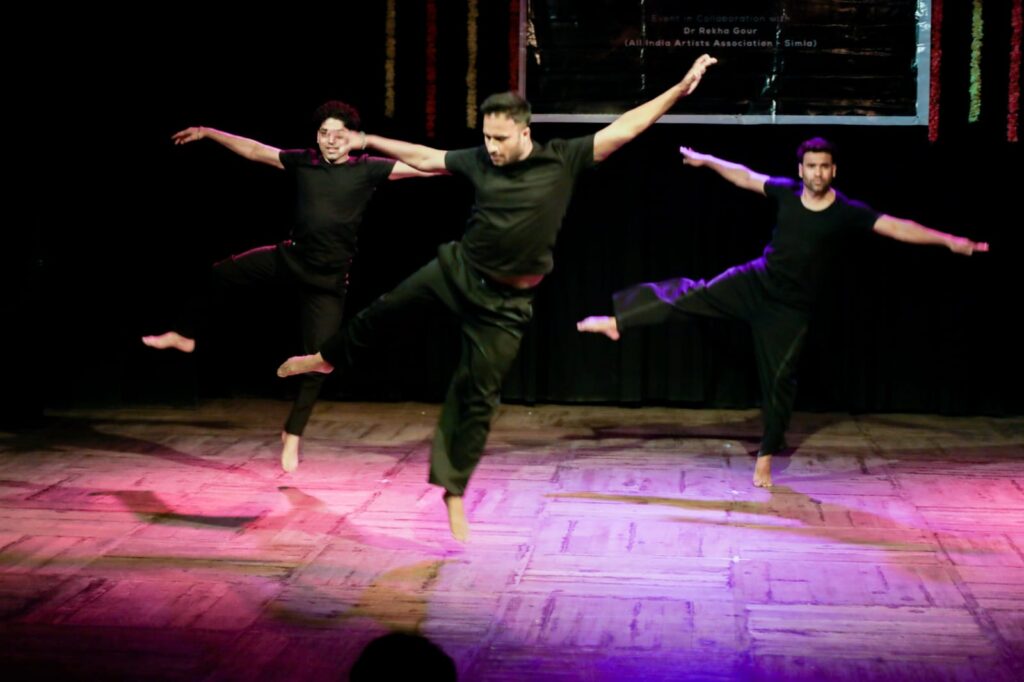
Richard D’cista and team – if the body as the Yantra .. in its tussle with the mind
Richard D’Costa & team presented a unique exploring of Yantra through contemporary dance form. A question emerged in the choreography. Even as the body that is the yantra is invoked with tantra and mantra, even as we struggle to sieve a cosmos – our questioning mind comes into focus as the virus… the key block. Are we not slaves to the yantra? It was a unique take with a question mocking at us. Is the yantra controlling us or are we controlling it?
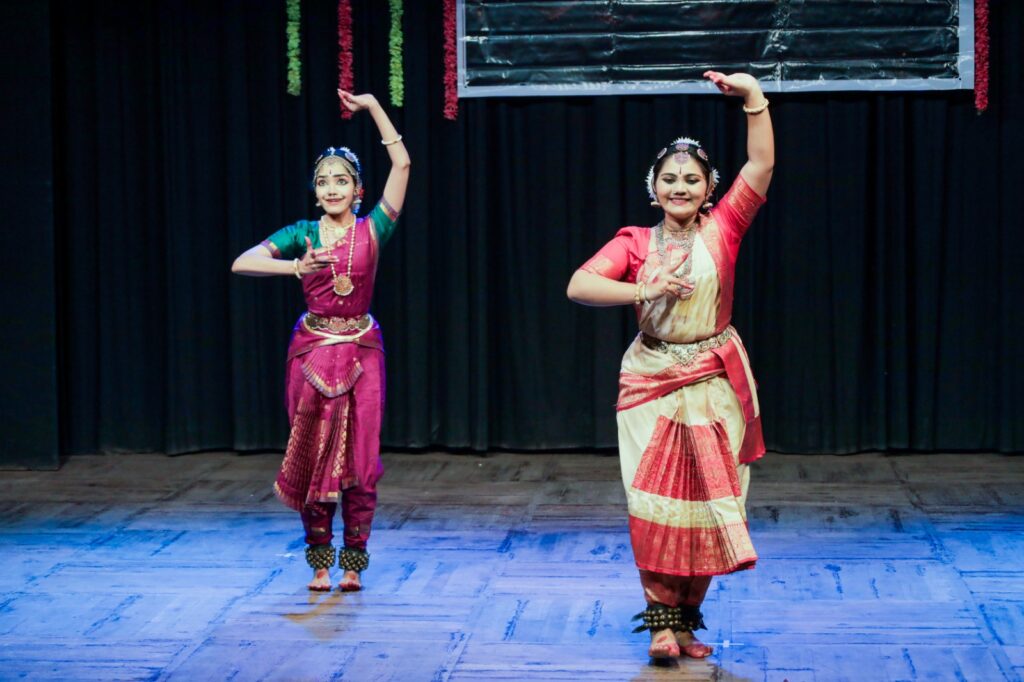
Disciples of Gayatri Acharya
Disciples of Kum. Gayatri Acharya (Nrityasurabhi Kalakendra) who is a very senior disciple of Guru Smt. Chhaya Khanvate and who is herself a teacher, competent Nattuvanar and an excellent choreographer presented a unique exploring of the journey of knowledge as divine feminine energy, in alignment with the theme. Beginning with Saraswati as vidyā—pure, unmanifest knowledge—it evolved into sculpting visually Shyamala (Raja Matangi), the embodiment of sound, music, and expression. Through a Pushpanjali interwoven with Shyamala Dandakam, the piece performed by Kum Rajalakshmi Iyer and Kum Kasturi Shinde traced the movement from stillness to sound to embodied expression (vak), invoking Saraswati Yantra evocatively. The chastely choreographed duet spoke volumes about Gayatri not only as being a committed Mentor but a choreographer with her feet firmly rooted in her inculcated tradition.
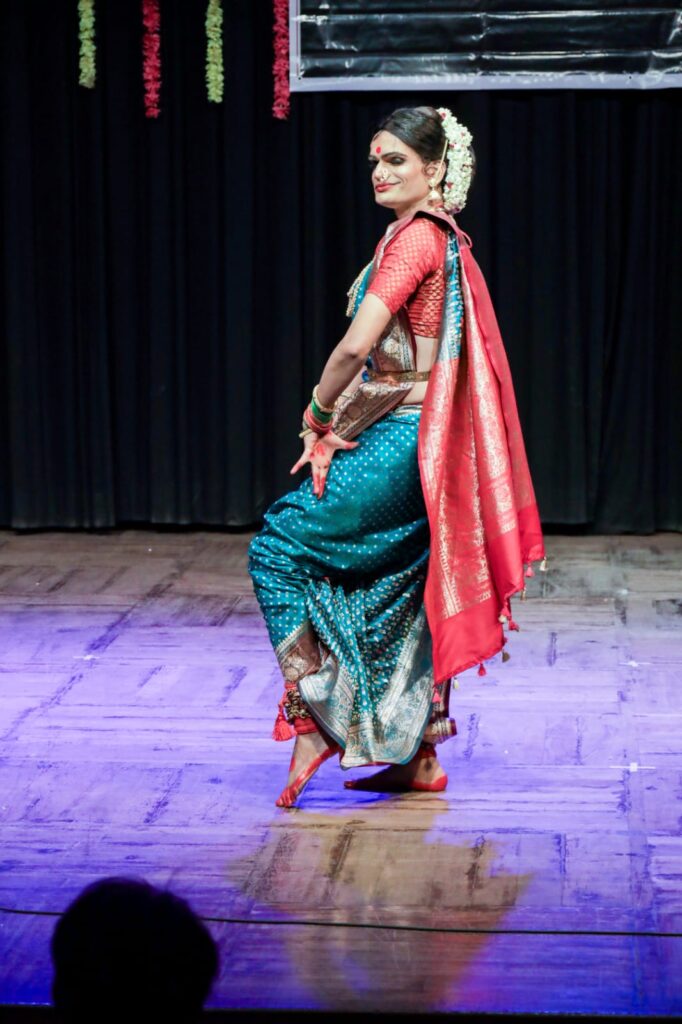
Lavani dedicated to Indian Actress late Sandhya Shantaram and Nilesh Auti
Celebrating the colours of dance forms on Dance Day came the Lavani by the very experienced Lavani artist Nilesh Auti, energized all with its signature coquettishness, eloquence of the eyes and arresting movements. How beautiful it was that the Lavani ‘Chabidar Chabi’ was dedicated to the very versatile dancer Late Sandhya Shantaram.
‘On International Dance Day dancers celebrated their forms not merely as entertainment, but as a “silent voice of devotion” that transformed physical motion into a visible song of the soul to have their bodies transform to a Yantra resonating cosmic harmony’
By Kalashri Dr Lata Surendra
(Renowned Bharatanatyam exponent, Teacher, Choreographer, Writer, Curator, Independent Researcher, Dance Journalist and in the field for over Six and half decades)