
By Shri Mani Patron of Arts and Curator
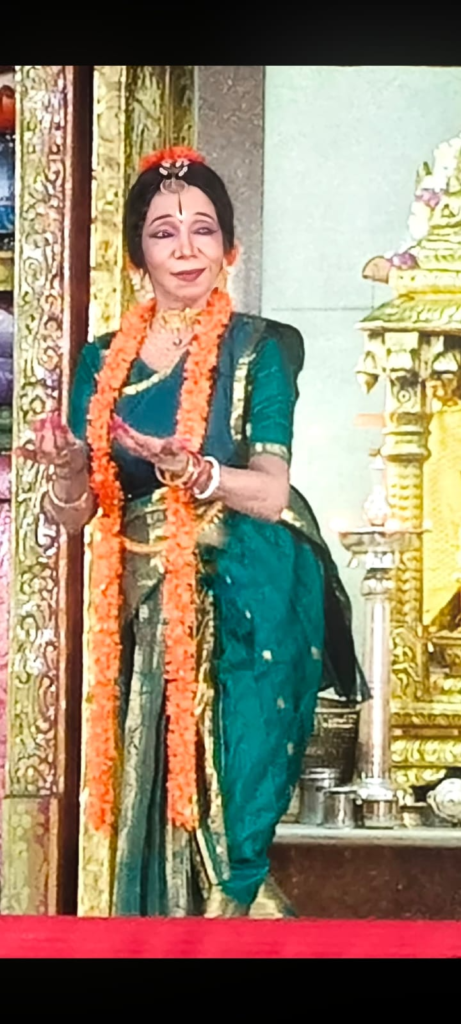
In the sacred, historic precincts of the Asthika Samajam temple—a venue whose two-century-old stone floors once embraced and nurtured every dancing foot long before modern auditoriums existed—audiences were treated to a rare, sublimely woven tapestry of classical dance. Conceptualised, curated, and choreographed by the deeply imaginative Bharatanatyam exponent and guru, Kalashri Dr. Lata Surendra, Sakshithatam emerged not merely as a performance, but as a spiritual chronicle. By masterfully blending the didactic potency of Kathak, performed by the disciples of Sushri Guru Lata Bakalkar and senior exponent Paullumi Mukherjee, with the structural depth of Bharatanatyam, performed by herself, her disciples, and Guru Sahana Bharadwaj, Dr. Surendra delivered an unforgettable evening of artistic synergy.
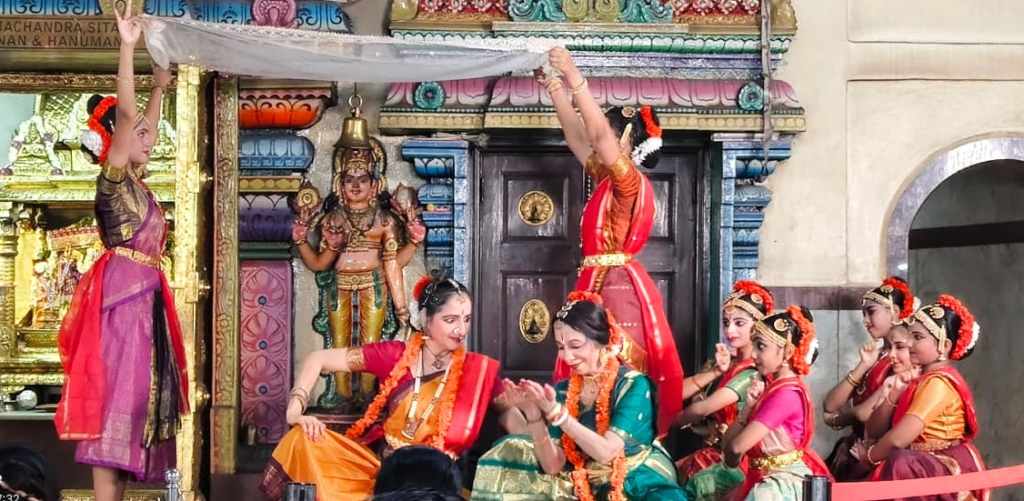
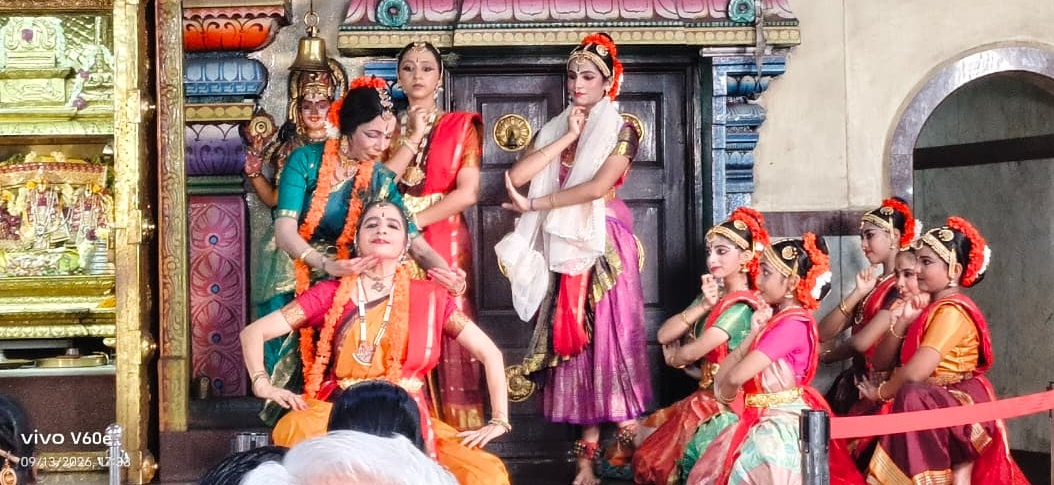
Guru Sahana Bharadwaj & Kalashri Dr Lata Surendra
The soul of the presentation lay in its brilliant narrative framing. Dr. Lata Surendra lent her own voice to a beautiful, evocative first-person commentary, speaking as the ancient River Yamuna—the eternal witness (Sakshi) to the divine play of the cosmos. Through this fluid perspective, the audience was guided through the metaphysical significance of the divine couple, beginning with an exploration of the sacred syllables of ‘Radha’—where Ra and Dha weave a cosmic shroud of Krishna around the one who utters it.
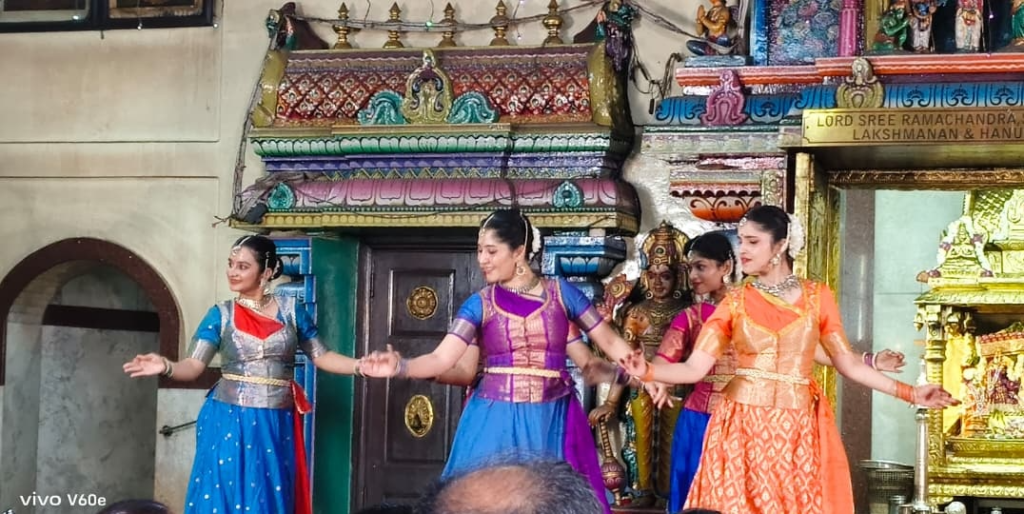
Disciples of Guru Sushri Lata Bakalker
The performance opened with a unique, rhythmically complex piece set to Sankeerna Triputam tala. Right from the onset, Dr. Surendra highlighted the duality of cosmic energies through exemplary footwork. This transitioned seamlessly into a traditional Varnam format utilizing Bilvamangal Swami’s Krishnakarnamrutham slokas. Here, Radha’s agonizing longing for herbeloved was brought out with exquisite emotional vulnerability. The rhythmic patterns in the solo session were made brilliantly explicit by Dr. Lata’s thunderous, incredibly precise footwork—crisp jathis executed with a technical clarity that could be heard distinctly from afar.
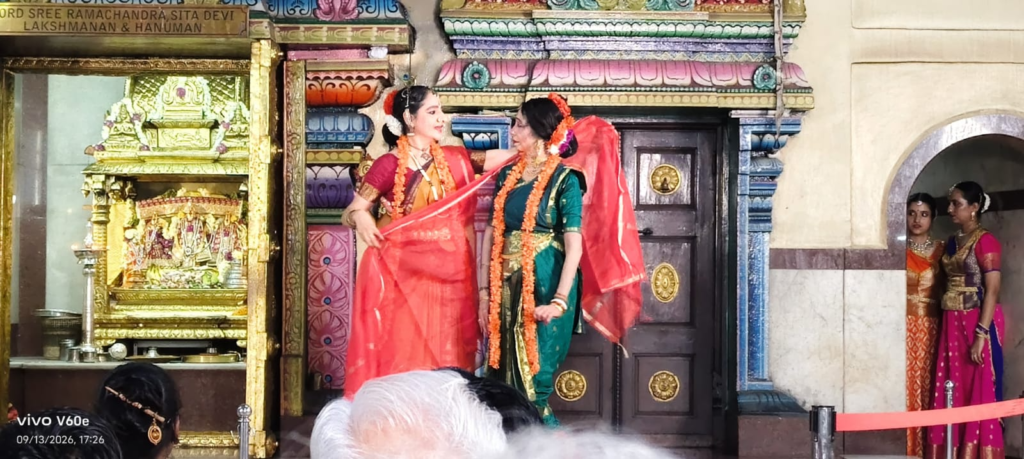
Guru Sahana Bharadwaj & Kalashri Dr Lata Surendra
This masterclass in nritta culminated in a poignant solo segment charting their dramatic separation. As Krishna takes his leave from Vrindavan to fulfill his earthly mission, the heavy moment of parting—witnessed by the weeping Yamuna—moved the audience to tears. The scene of Krishna entrusting his crown and flute was enacted with a beautiful, understated restraint by Guru Sahana Bharadwaj, providing a perfect artistic foil to the dignified and heart-wrenching lament of Dr. Lata’s Radha. In this tender yet sorrowful exchange, the narrative dialogue hung heavy in the air: “You, Krishna, have battles to fight and a waiting purpose; let me remember you with the peacock feather as the crown and the weapon that is your flute.” As Krishna surrenders his flute to her, he promises that the world will forever remember them as one entity: Sri Radha Krishna. The river lamented as the physical separation was finalized, but it was here that Radha awakened to the ultimate non-dual reality of becoming Krishnamayi Radha.
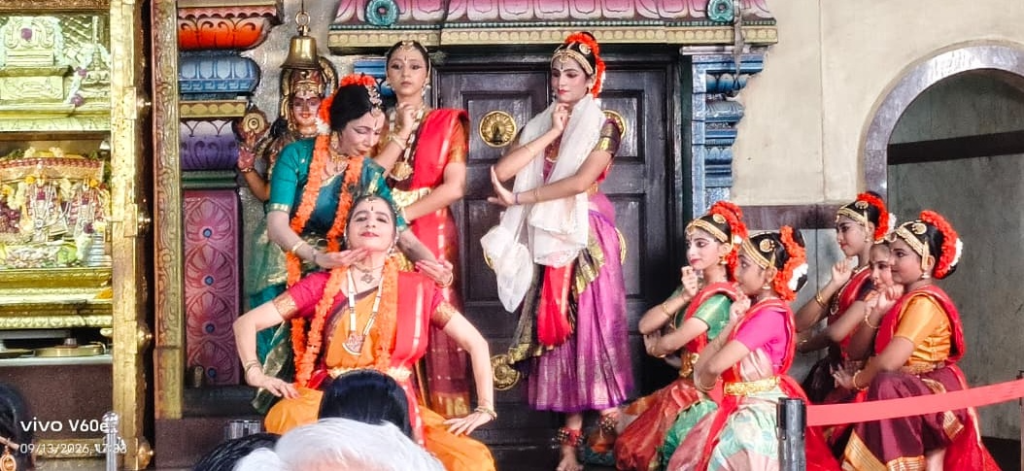
The second half of the presentation expanded on these themes with breathtaking showmanship and spiritual depth. In the rendition of the Radhashtakam, Dr. Lata Surendra demonstrated her seasoned mastery over bhava (emotion) and nritta (pure dance), moving beyond the limitations of the physical body. A standout highlight of this segment was the deeply moving Sudama episode. Guru Sahana Bharadwaj—an experienced and versatile Yakshagana teacher—portrayed a magnificent Krishna, beautifully completing Dr. Lata’s heart-wrenching depiction of the impoverished Sudama. Sahana’s seasoned dramatic instincts anchored the scene with a profound, emotional gravitas, transforming the quiet reunion of two friends into a powerful testament of divine grace.
The river then spoke of how Krishna skillfully manipulates his way into every open heart through varied expressions of love. To depict this, Dr. Lata’s brilliant choreographic vision came to the fore. In an innovative masterstroke, she chose the traditional padam Krishna Nee Begane Baro—a staple traditionally reserved for the Bharatanatyam repertoire—and reimagined it for a change through the lens of Kathak. She entrusted this task to the veteran Kathak Guru Paullumi Mukherjee. With subtle bhava and an artistic flourish born of decades of experience, Paullumi skillfully showcased three distinct facets of calling out to Krishna: first as the beloved Radha, then through the tender maternal lens of Yashoda, and finally through the pure surrender of a devoted seeker.
The youthful romance of the divine duo was brought alive through a brief but highly impactful choreography by Guru Sushri Lata Bakalkar. Her disciples beautifully executed the dramatic first meeting of Radha and Krishna, preceded by a charming sequence of peacocks guiding them toward one another. The Yamuna then recalled the age-old saga of their subsequent trysts, carrying the poetry of the Navarasas (nine emotions) within Radha—where every joyful meeting carried the heavy shadow of an imminent parting, alternating between feigned anger, longing, and sweet unwillingness.
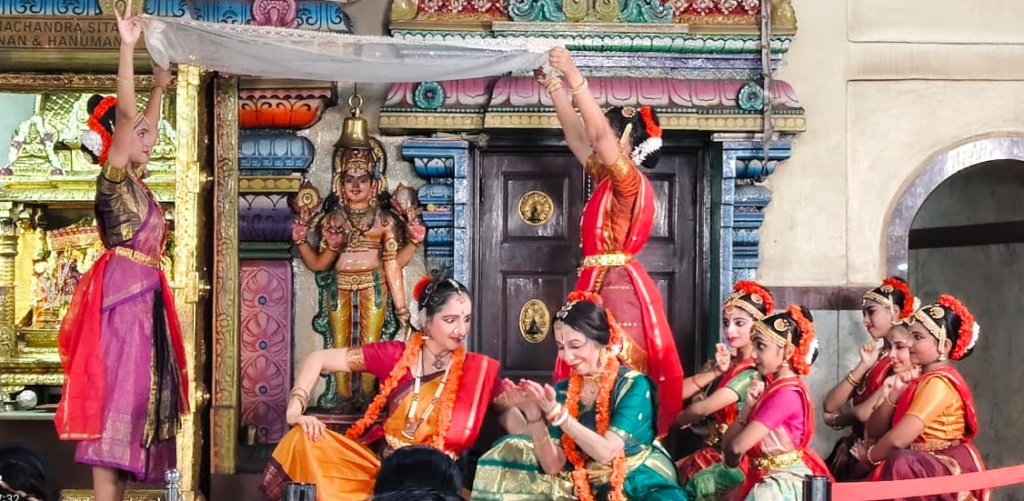
This eternal cycle of parting and meeting was brilliantly explored through the idiom of Jayadeva’s Ashtapadi, Priye Charusheele, where the Lord of the Universe bows down to place Radha’s feet upon his head (Mama Shirasi). Bypassing predictable stagings, the highly imaginative choreographer and dancer Dr. Lata Surendra conceptualized a unique presentation using a translucent veil. This structural barrier functioned as a parting wall between the lovers, beautifully mirroring the complex emotional transparency of the scene: showing a willingness hidden within every layer of unwillingness portrayed by the lovers. The prop was handled with exquisite theatricality until it vanished altogether, letting the barrier dissolve to surround them both in a private, sublime world of their own. Guru Sahana Bharadwaj presented a wonderfullypleasing, gentle Krishna whose earnest entreaties made the audience long to intercede on his behalf.
The mood shifted to lighthearted mischief with the arrival of Krishna masquerading as a bangle seller. Guru Bakalkar’s disciples brought this playful deception to life with meticulous perfection, showcasing the absolute comfort and sharp technical precision they have honed over years of rigorous tutelage. The grand finale was a majestic testament to artistic unity, building to an unforgettable climax. During the Kasturi Tilakam episode, the production highlighted a seamless synergy between both Kathak and Bharatanatyam. This paved the way for a joyous, festive Hori, beautifully executed by the disciples of Guru Lata Bakalkar, which simulated the playful splashing of colors and divine fragrance. This dissolved into a spectacular, unforgettable Raas that the Yamuna river simply cannot forget to remember, where the dancers spun into a singular vortex of devotion accompanied only by the meditative, soaring chant of Om Shree Radhakrishnaya Namo Namaha. As the presentation drew to a close, the Yamuna’s cry echoed through the auditorium, leaving a lingering ache for the heavenly days that once caressed her banks. Yet, Sakshithatam concluded on a note of profound hope. The river gently reminded the audience that this eternal heaven is not lost to the past; it can be resurrected within any realized heart that embodies the essence of Krishnamayi Radha and Radhamayi Krishna. In an age dominated by the chaotic, fracturing noise of modern media and breaking news, Dr. Lata Surendra’s masterpiece provided a much-needed, timeless sanctuary of peace, beauty, and spiritual oneness.
Dr. Lata Surendra
(Bharatanatyam Exponent, Teacher, Choreographer, Writer, Curator, Independent Researcher, Dance journalist
and in the field of dance over six and half decades)